

Seeing your first cloud of shrimplets next to full grown females is exciting, and it raises the question of how to separate baby shrimp from adults without causing stress. You want the babies to eat, grow and avoid being outcompeted, but you also do not want to crash your cycle with constant netting and moving. This buying guide helps you choose a separation approach that fits your goals, not someone elses breeding rack.
Your best setup depends on four variables: your shrimp species and hardiness, your tank size and layout, your current water parameters and stability, and your budget for extra gear. A hardy Neocaridina colony in a planted tank needs a different plan than sensitive Caridina you are line breeding for color. If you are new to this side of the hobby, browse the Breeding + Culling + Disease archive to see how separation, culling and health decisions connect.
What Actually Matters
Why You Want Separation in the First Place
Start with your reason, because that decides how much separation you actually need. Many keepers leave babies with adults when the tank is shrimp only, heavily planted and has gentle filtration, and the babies do fine grazing on biofilm all day. You lean toward physical separation when you need to protect newborns from fish, track a specific berried female drop, or cull for pattern while babies are still tiny and hard to catch later.
Feeding is another common reason, since shrimplets feed almost constantly and adults can push them off food dishes. If you watch and see babies getting chased from pellets or powder blowing away before they find it, a divider, breeder box or dedicated grow out space can help. For background on setting up a breeding friendly layout, this guide to shrimp substrate setup ideas for shrimp breeding tank shows how cover and surface area change survival.
Separation Method and Stress Level
The gentlest option is usually no net at all, meaning dense moss, leaf litter and feeding zones inside the main tank so babies can hide and eat. The next step up is an in tank breeder box or divider that shares the same water, which makes catching and feeding easier while avoiding a whole new cycle. A separate grow out tank gives you the most control for culling and feeding, but it also adds cycling, testing and maintenance work.
Weigh handling stress against your goal. Netting newborn shrimplets every few days to sort color can slow growth and cause losses, especially for delicate Caridina. If your goal is simply higher survival, better cover plus targeted powder feeding in calm corners often beats moving babies back and forth.
Water Stability Between Tanks or Boxes
Babies are less forgiving of swings than adults, so any separation plan lives or dies on water consistency. An in tank box wins here because temperature and chemistry stay identical to the main tank with no acclimation needed. A separate tank must be fully cycled with matching parameters before babies go in, and you should test before and after every move.
Think about flow, filtration and intake safety too. Sponge filters and prefilter sponges keep shrimplets from being pulled in, while strong intakes without guards are a common loss point. Keepers commonly report using air driven sponge filtration for grow out tanks because flow stays soft and grazing surface stays high, but whatever you use, baffle it and check corners for trapped babies daily at first.
Feeding Access for Tiny Mouths
Shrimplets cannot chew large pellets, so they need constant access to biofilm plus fine powder that drifts and settles where they hide. Look for foods built for babies with very fine texture, plant and algae based ingredients, and added calcium and minerals to support molting and shell growth. You want something that clouds just enough to reach moss and substrate without fouling water when dosed lightly.
Dosing control matters more than ingredient count. A powder that includes a small scoop and clear guidance for smaller colonies helps you avoid overfeeding, which is the fastest way to spike ammonia in a breeder box. You also want a food that does not require complicated prep, since you will be feeding small amounts often while babies are present and consistency beats perfection.
The example below shows the range of shrimplet focused nutrition gear you will see while shopping. Think of it as a reference point for texture, ingredients and feeding style as you build your own separation plan. Here are a few options that show the range:
This article contains affiliate links. If you buy through one of our links, Shrimpyo may earn a commission at no extra cost to you. Commissions never influence which products we recommend or how we rank them. Read our Affiliate Disclosure for details.
Quick Picks at a Glance
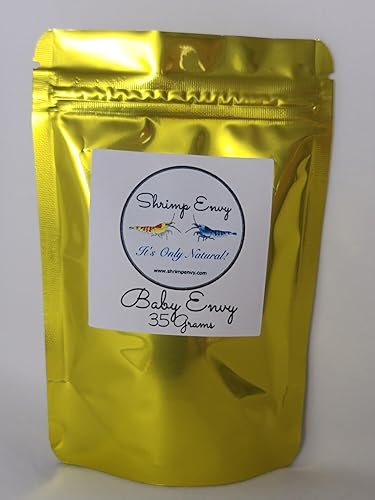
Prime ShrimpEnvy Baby Envy Natural Shrimplet Powder Food
As an Amazon Associate we earn from qualifying purchases. Product prices and availability are accurate as of the date/time indicated.
Pros
- 100% natural and organic ingredient list with no artificial fillers
- Supports growth, molting and breeding with calcium, minerals, amino acids and probiotics
- Fine powder reaches shrimplets that cannot compete for pellets or wafers
- Versatile for shrimp, snails, crabs and baby fish in freshwater aquariums
- Clear feeding instructions with easy dosing for small and large colonies
Cons
- 35 gram package may run out quickly in heavily populated breeding tanks
- Powder foods require careful dosing to avoid overfeeding and water quality issues
- Plant based formula may need to be supplemented for adults needing higher protein
Baby Envy by ShrimpEnvy is a powdered complete food made specifically for baby shrimp, plus young snails, crabs and fry. It is ideal for Neocaridina and Caridina breeders, nano tank keepers and anyone who struggles with shrimplet survival in the first few weeks.
The standout is the ingredient diversity, with mulberry, nettle, dandelion, moringa, kale, spinach, spirulina, chlorella, wheatgrass, alfalfa, kelp and bee pollen. Added pea protein, calcium, beta-glucan, amino acids, chitosan and probiotics help support steady growth, clean molts and active grazing behavior.
The ultra fine powder format works well in real tanks because it drifts and settles where tiny shrimplets feed. The included scoop and twice weekly routine make it simple to dose, with a half scoop option for smaller tanks and a higher dose for dense colonies.
The main drawbacks are typical for powder fry foods. Overdosing is easy, so uneaten food can cloud water if you do not siphon carefully. The small 35 gram pouch is convenient for nano setups but frequent breeders will need to reorder often.
Overall, Baby Envy is a smart pick for shrimp keepers focused on breeding success and early growth. If you want a natural, nutrient dense first food that tiny mouths can actually eat, this is an excellent addition to your feeding rotation.
Brand is JungleAquashrimp from manufacturer Shrimp Envy. Form is unflavored powder for aquarium use, suitable for all life stages with a plant based diet type.
Target species includes aquatic shrimp and invertebrates, and it is also commonly used for snails, crabs and baby fish. Package weight is 35 grams in a compact pouch for easy storage near the tank.
Feeding guide is one scoop twice per week when babies are present. Use a half scoop for smaller tanks or small colonies, and increase slightly for highly populated breeding tanks while monitoring water quality.
Matching Gear to Your Tank
Scenario one is a Neocaridina colony with your first surprise babies in a planted shrimp only tank. You do not need a new tank yet. Add more moss, cholla or leaves for hiding spots, turn flow down if you can, and create two or three calm feeding corners away from adult traffic. For targeted feeding, Baby Envy Shrimp Food by ShrimpEnvy is a useful illustration because it is a fine powder blend of mulberry, nettle, dandelion, moringa, kale, spinach, spirulina, chlorella and other plant based ingredients with added calcium, amino acids and probiotics.
In this setup, follow a light routine like 1 scoop twice a week when babies are present, and use 1/2 the scoop for smaller tanks or smaller colonies as the label suggests. Dust it near cover, not in open water, so shrimplets find it without competing with adults. If powder remains visible after several hours or you see pests increase, cut back and siphon gently rather than adding more.
Scenario two is a Caridina keeper who wants to track a high grade drop or separate lower grade babies for culling later. Here an in tank breeder box or a small cycled grow out tank makes sense because you can watch development and sort without tearing apart the scape. Keep water identical between containers, move some seasoned moss or substrate with the babies for grazing, and keep lighting and flow soft so they settle quickly.
Feeding control is critical in small volumes, so a measured powder like Baby Envy Shrimp Food by ShrimpEnvy helps you see what a baby focused formula looks like on paper. The 35 gram package size is easy to store and scoop in tiny amounts, which suits a breeder box routine. Pair your feeding plan with stable active soil thinking, and this comparison of Fluval Stratum for shrimp versus ADA Aqua Soil can help you understand why substrate choice affects baby survival.
Scenario three is a community tank with tetras, guppies or a betta where shrimplets rarely survive to juvenile size. If your goal is breeding numbers, separation is less optional and more required. Move berried females to a shrimp only box just before hatching when possible, then return the female after release, or move newborns with a cup and gentle pour rather than a coarse net that can injure them.
In this case, choose gear for safety first: fine mesh, smooth edges, lid to prevent jumps, and sponge covered intakes in both the main and grow out space. Feed powder in the grow out box where fish cannot steal it, keep cover dense, and resist mixing babies from different lines until you have a culling plan. Your survival rate should climb once babies can eat undisturbed around the clock.
Common Mistakes
Mistake one is chasing every baby with a net the moment you spot it. You stir up substrate, spike waste, stress the mother and still miss half the babies hiding in moss. Instead, observe for a day, set a feeding spot, then catch calmly with a cup during feeding time, and always test water before and after any move. If you have not tested yet, read this breakdown of test kit versus food priorities before you buy more gear.
Mistake two is overfeeding powdered baby food in a breeder box because it fouls water fast. Because the box has low volume and low flow, uneaten powder settles, grows fungus and can harm babies overnight. Start with less than you think you need, watch how quickly it disappears, and siphon leftovers with airline tubing. More food does not equal faster growth if waste rises and molting stalls.
Mistake three is setting up a brand new uncycled container and dropping babies in the same day. Even if water looks clear, ammonia and nitrite can climb and wipe out a whole drop while adults look fine. Cycle the grow out space with seeded media, match temperature and chemistry closely, and give babies seasoned surfaces to graze from day one.
My Experience
I run a small Neocaridina colony in a heavily planted tank with a sponge filter, and I tried both leaving babies in and using an in tank box when I wanted to watch a specific drop. I liked keeping them in the main tank for low stress, but I fed a fine powder in the moss corners so the tiny ones did not have to fight adults at the dish. I followed the 1 scoop twice a week when babies are present routine and dropped to 1/2 the scoop when numbers were low, and that light touch kept water clear while I could still see round bellies and active grazing.
Who Should Wait or Buy Differently
If your tank is still cycling, you are fighting unstable parameters, or you only have a few adult shrimp and no babies yet, a dedicated separation setup is not ideal for you right now. Focus first on cover, gentle filtration and stable feeding in the main tank, and let the colony establish before you add boxes and second tanks to maintain. You can revisit separation once you see regular berried females and steady shrimplet survival without intervention.
Frequently Asked Questions
Should I move baby shrimp as soon as I see them?
Not always. In a shrimp only tank with moss, leaves and sponge covered filters, you can often leave them to graze safely and just add powder feeding in sheltered spots. Move them only if fish, strong intakes or selective breeding goals put them at clear risk.
How long do separated babies need to stay apart from adults?
Keep them apart until they are clearly too large to be eaten or pulled into filters and can compete for food at the dish. For many keepers that means waiting until juveniles show adult color and confident grazing behavior before reintroducing them. Move them back slowly with matched water and plenty of cover on return day.
Do baby shrimp need special food when separated?
Yes, because newborns graze constantly and need fine particles they can reach without leaving cover. A baby focused powder with plant, algae and mineral support plus biofilm in the tank gives them steady nutrition between feedings. Feed lightly and often while babies are present, and remove uneaten food to protect water quality.
Write Your Review
No reviews yet. Be the first to share your experience!