

You want to learn how to prepare indian almond leaves for shrimp tank for crystal red shrimp without staining the water too dark or stressing sensitive Caridina. The decision comes down to shrimp species and hardiness, tank size, current water parameters, and budget, because crystal reds respond faster to pH shifts and tannins than hardier Neocaridina.
In my own setup, preparation matters more than brand. A good rinse, a calm soak, and a small starting dose will do more for berried females and shrimplets than buying extra leaves. If you are building a botanical routine, browse the full Indian Almond Leaves + Botanicals collection to see how leaves fit with pods, alder cones, and wood.
What Actually Matters
Start With Leaf Size, Not Leaf Count
Leaf size controls how fast tannins release and how easily you can dose a small Caridina tank. Large leaves in the 8 to 12 inch range carry a lot of material in one piece, so they suit larger aquariums where you want lasting leaf litter. Smaller leaves in the 4 to 7 inch and 6 to 7 inch range are easier to portion for nano tanks.
For crystal reds, think in small squares first. One useful starting point from experienced keepers is to cut a piece of leaf 1 to 2 inches square for each gallon, then watch color and shrimp behavior for several days. For larger aquariums, another common reference is 2 to 3 medium to large size leaves per 25 gallons, added gradually rather than all at once.
Decide How Much Tannin Your Crystal Reds Actually Want
Crystal red shrimp prefer a soft, slightly acidic, stable environment with gentle tannins and plenty of biofilm. Catappa leaves release acids and tannins that can mildly reduce pH, soften water, and create that tea colored blackwater look. That tint also gives shy shrimp and new shrimplets more security, which often improves grazing and breeding comfort.
You do not need dark water to get benefits. A light amber tint with visible biofilm is enough for many Caridina tanks, especially if you already use active soil. If your source water is already soft and acidic, start with less leaf and test before and after. For more background on Caridina botanical balance, read how to choose botanicals for crystal red shrimp before you increase the dose.
Choose Your Prep Intensity: Rinse, Soak, or Boil Plus Soak
Preparation is about cleaning the leaf while keeping enough goodness for biofilm. At minimum, rinse every leaf before use to remove dust and loose fragments, even if the pack looks clean. A plain soak in fresh dechlorinated water for several hours to a day will help leaves sink faster and release the first strong burst of tannins outside the shrimp tank.
Boiling is stronger and faster, but it also strips more tannins and softens the leaf structure. If you boil, keep it short and follow with a post-boil soak in fresh water, which is a recommended step for calmer, cleaner introduction. For crystal reds, many keepers prefer rinse plus soak over a hard boil, because the slower breakdown supports longer grazing and a more stable pH shift.
Check Leaf Quality and Clean Sourcing
Look for 100 percent natural dry leaves that are completely free from chemical residues, carefully dried to preserve their natural qualities. Good leaves are intact, dry, brittle but not crumbly, with no mold spots, sour smell, or oily coating. Packs sourced from mature tropical almond trees and hand selected for shrimp tanks tend to break down more evenly.
Avoid leaves that arrive damp, dusty, or with a chemical odor, and do not use garden leaves unless you know they are pesticide free. Torn edges are fine if you cut them yourself for portioning, but the center vein should feel firm. Clean sourcing matters most for crystal reds because shrimplets graze directly on the leaf surface for days.
To see the range of sizes and portioning styles, here are a few options that show the range from large litter leaves to small nano portions:
This article contains affiliate links. If you buy through one of our links, Shrimpyo may earn a commission at no extra cost to you. Commissions never influence which products we recommend or how we rank them. Read our Affiliate Disclosure for details.
Quick Picks at a Glance
Prime JungleAquashrimp Indian Almond Catappa Leaves 20

Prime SunGrow Catappa Indian Almond Leaves 10 Pack 4-7
Prime TenderTropicals Catappa Indian Almond Leaves 10

Prime SunGrow 50 Pack Mini Catappa Indian Almond Leaves
As an Amazon Associate we earn from qualifying purchases. Product prices and availability are accurate as of the date/time indicated.
Pros
- 100 percent natural with no chemical residues for sensitive shrimp and fry
- XL size lasts longer and covers 25 gallon tanks with just 2 to 3 leaves
- Multi benefit support for molting, color, breeding and stress relief
- Doubles as food, shelter and water conditioner in one simple addition
Cons
- Releases brown tannin tint that blackwater fans love but clear water keepers may need to manage
- Takes a couple days to waterlog and sink unless boiled first
- Oversized leaves must be cut into 1 to 2 inch pieces for nano Betta bowls and small tanks
JungleAquashrimp Catappa Leaves are extra large Indian Almond leaves sized 8 to 12 inches and supplied as a 20 count pack for freshwater aquariums. They are made for Betta, Discus, Crystal Red, Cherry Shrimp and other small fish and fry that thrive in tannin rich water.
In use, the leaves slowly release tannins and beneficial acids that help create soft, natural blackwater conditions. Shrimp and fry actively graze the biofilm that forms on the surface, which supports feeding, vibrant color and more confident breeding behavior.
The leaves are 100 percent natural, dry and free from chemical residues, with large, intact sizing that lasts longer than small grades. Once waterlogged in a couple days they sink and soften, then gradually break down as shrimp and fish nibble them for nutrients.
The natural tannin tint is part of the benefit, but it will color the water amber which may not suit aquascapers wanting crystal clear water. The XL size is generous for larger tanks, so nano tank owners will want to cut 1 to 2 inch squares for precise dosing.
For natural shrimp and Betta care, these leaves offer shelter, food and water conditioning in one simple step. If you want low stress, natural behavior and healthier molts with authentic leaf litter aesthetics, this pack is an easy, effective choice.
For Bettas, add a 1 to 2 inch square piece per gallon directly to the tank. Fish will nibble, hide under it or use it for cover and spawning comfort.
For larger community or shrimp tanks, use 2 to 3 medium to large leaves per 25 gallons. Boil briefly to sink faster or let them sink naturally in a couple days.
Leave the softened leaf in place until nearly dissolved, then add a fresh leaf. You can remove old stems or leave them to fully break down as continued grazing.
Brand: JungleAquashrimp, Form: Natural dry Catappa Indian Almond Leaves, Size: L to XL 8 to 12 inches.
Count: 20 leaves per pack, Target Species: Betta, Discus, Crystal Red Shrimp, Cherry Shrimp, small fish and fry.
Use: Aquarium water treatment for tannins, biofilm, pH support and leaf litter cover.
Pros
- 100 percent natural, chemical-free way to condition water and add tannins
- Serves as both shelter and supplemental food source as biofilm develops
- Tearable size range works for small and large shrimp tanks
- Supports calmer behavior, molting privacy and better breeding comfort
Cons
- Requires rinsing plus boiling or soaking before adding to the tank
- Leaves slowly break down and need regular replacement to stay effective
- Size varies from 4 to 7 inches, so large leaves must be torn for nano tanks
SunGrow Catappa Indian Almond Leaves are a 10-count pack of raw 4 to 7 inch leaves designed for freshwater shrimp aquariums. They are made for shrimp keepers, breeders and anyone keeping sensitive species that thrive in soft, slightly acidic water with plenty of cover.
In use, the leaves sink after a few days and start to soften, creating a natural grazing surface rich in biofilm. Shrimp actively pick at the surface and will consume the soft tissue down to the skeleton, which supports natural foraging and balanced nutrition.
The leaves release tannins that help lower pH, soften water and tint the tank like a natural blackwater habitat. The raw, whole leaf format feels sturdy at first and tears easily, so you can size pieces for nano cubes or larger shrimp colonies without special tools.
Preparation is required, as you need to rinse and preferably boil then soak in fresh water before placement. Size variation means some leaves may feel large for very small tanks, and decomposed leaves must be removed and replaced over time.
For shrimp focused tanks, these leaves offer strong value as shelter, comfort and functional water conditioning in one simple addition. If you want calmer shrimp, more natural behavior and better breeding support, this 10-pack is an easy keeper staple.
Brand: SunGrow, Model: CL01, Count: 10 raw Catappa Indian Almond Leaves.
Leaf Size: 4 to 7 inches long, tearable for nano and standard aquariums. Form: Natural dried sheets for freshwater use.
Target Species: Freshwater shrimp, also suitable for fish that prefer tannin rich water. Care: Rinse before use, boil and post-boil soak in fresh water recommended.
Rinse each leaf thoroughly before use to remove dust and surface debris. For cleaner results, briefly boil then soak in fresh water before adding to the aquarium.
Place one leaf at a time and allow it to sink naturally over a few days. Start with a small piece in nano tanks and observe water tint and shrimp behavior.
Leave the leaf in place for grazing until only the skeleton remains, then remove and replace. Avoid overloading small tanks to prevent sudden shifts in water chemistry.
Pros
- Large 6-7 inch leaves last longer and provide more shelter than small broken pieces
- Promotes biofilm grazing that especially benefits newborn shrimplets
- Supports softer, more natural tannin rich water for shrimp, snails and Bettas
- Easy rinse and place setup works well for beginners and breeding tanks
- Compatible with multiple invertebrates including crayfish, snails and community nano species
Cons
- Tannins tint water with a tea color that may not suit clear water aquascapes
- Leaves naturally decompose and need regular removal and replacement
- 10 pack may run out quickly in larger tanks or heavy biofilm grazing setups
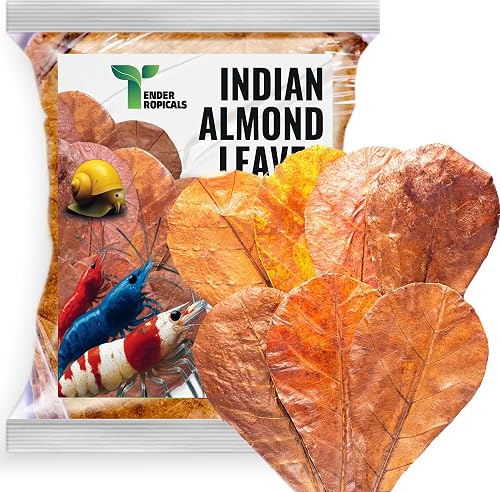
TenderTropicals Premium Catappa Leaves are 10 large 6-7 inch Indian Almond Leaves made for freshwater shrimp, snail and blackwater aquariums. They are built for keepers of Neocaridina, Cherry, Amano and Ghost shrimp, plus Bettas, crayfish and nano tanks that benefit from natural cover and tannins.
In the tank, the leaves slowly release tannins to soften water and create a natural tea colored blackwater look. As they soften, they grow biofilm that shrimp and shrimplets constantly graze on, while snails nibble the leaf itself for extra forage.
Quality feels a cut above bulk botanicals, with hand selected, intact leaves that are carefully dried to preserve natural tannins. The large size provides generous hiding spots that reduce stress and support more confident behavior and breeding.
The main tradeoff is the expected tinting and breakdown, as tannins will color the water and spent leaves must be removed and replaced. The 10 count format is perfect for nano tanks but larger setups will go through packs faster.
Overall, these are a simple, natural way to add food, shelter and authentic habitat conditions to a shrimp tank. If you want healthier shrimplets, calmer shrimp and a richer blackwater aesthetic, this 10 pack is an easy buy.
Brand: TenderTropicals, Model: Catappa Indian Almond Leaves
Pack Size: 10 leaves, each 6 to 7 inches long for generous tank coverage
Target Species: Neocaridina, Cherry, Amano, Ghost Shrimp, snails, crayfish and Bettas
Best For: Shrimp tanks, snail habitats, nano tanks, breeding tanks and blackwater aquariums
Form: Naturally dried whole leaves, rinse before adding to aquarium
Rinse each leaf briefly in clean water to remove dust, then drop directly into your aquarium.
Use one leaf at a time in nano tanks and add more for larger tanks or a stronger blackwater effect.
Leave in place to grow biofilm for grazing, then remove and replace once fully softened and broken down.
Pros
- Perfect mini 2 inch size for 5 gallon tanks, betta cups and shrimp habitats
- Supports natural breeding behavior plus cover and protection for eggs and fry
- Adds gentle tannins with calming tint and natural water conditioning benefits
- Durable leaves last well in water and double as natural food for detritivores
Cons
- Mini size releases tannins slowly, you may need multiple leaves or boiling for darker water
- Packaging is not resealable, so plan on using your own bag or container for storage
- Float and sink behavior varies, some leaves float for a while while others drop instantly
SunGrow Mini Catappa Leaves are natural dried Indian almond leaves designed for betta fish, shrimp, tetras, frogs and other small aquarium pets. They are a great fit for nano tank owners and breeders who want a chemical free way to recreate a native blackwater habitat.
Standout benefits include natural tannin release for a soothing tea color, gentle pH lowering and flavonoids that help condition water. In real tanks, bettas readily build bubble nests under them, while tetras, guppies and shrimp use them for shelter, spawning cover and grazing.
Each leaf measures about 2 inches, making it easy to dose small tanks without overwhelming the scape. The leaves look like clean, natural dried foliage and hold up well in water, slowly developing tasty biofilm that shrimp, snails and catfish love to pick at.
The tradeoff is size. Because they are mini, one leaf gives only a light tint, so you may need two or three leaves or a quick boil for stronger color and pH effect. Packaging also lacks a resealable seal and float time varies from leaf to leaf.
Overall, this is a simple, effective and natural aquarium addition for calmer fish, better breeding conditions and a more authentic aquascape. If you keep bettas, shrimp or shy nano species, this bulk pack is an easy win.
Brand is SunGrow, Model CL01 by Luffy Pets Collection. You get 50 mini Indian almond catappa leaves in leaf form, made for fish, shrimp, frogs and vivarium use.
Each leaf is approximately 2 x 2 x 0.1 inches and the pack is lightweight and allergen free. Leaves are intended as natural aquarium ornaments, litter and water conditioner, not as food or medication.
Start with one mini leaf per 5 gallons and observe tint and fish behavior for a few days. Rinse before use, then drop directly into the tank to float or sink naturally for shelter and slow tannin release.
For faster results, boil for a few minutes to release more tannins and help leaves sink quickly. Replace leaves as they break down and store unused leaves in a dry, sealed container to keep them fresh.
Matching Gear to Your Tank
Match leaf size and count to your tank volume, buffering, and goal. Crystal red tanks do best when you start light, observe for a week, then add more only if pH and behavior stay steady.
For a small Caridina breeding nano with active soil, choose portionable leaves you can tear into squares. The cholla wood for shrimp beginners pairs well here, because wood plus a small piece of leaf creates hides without heavy staining. In this setup, SunGrow 10 Pcs Catappa Indian Almond Leaves in the 4 to 7 inch size and Premium Catappa Leaves for Shrimp Tanks in the 6 to 7 inch size are easy to rinse, soak, and cut into 1 to 2 inches square portions for each gallon.
For a larger 25 gallon blackwater display or colony tank, lasting litter and steady tannins matter more than precise squares. Larger leaves give depth, cover for fry and shrimplets, and slower replacement. In that case, L-XL Catappa Leaves Indian Almond Leaves Discus in the 8 to 12 inch size fits the classic approach of 2 to 3 medium to large size leaves per 25 gallons, added one at a time with testing between additions.
For a shrimplet grow out, quarantine nano, or low tint Betta style setup, mini leaves give gentle cover and easier control. You can drop in a single small leaf after rinsing and soaking, let shrimp graze it down to the skeleton, then replace it. The SunGrow 50 Pcs Mini Catappa Indian Almond Leaves pack suits this style, because you get many small portions and can adjust color without committing to a full large leaf.
Common Mistakes
Dropping dry leaves straight into a crystal red tank. Unrinsed leaves can carry dust and release a fast tannin pulse that clouds water and shifts pH. Always rinse before use, soak until waterlogged, and add the leaf after the soak water is discarded if you want lighter color.
Boiling too long and pouring the dark brew into the tank. A hard boil plus hot tannin water can swing parameters overnight, which Caridina dislike. If you boil, keep it brief, follow with a post-boil soak in fresh water, and never add hot water to the aquarium.
Adding too much leaf at once and removing the old skeleton too fast. New leaves need a few days to settle, soften, and grow biofilm that shrimp love to graze on. If you pull the old leaf the moment it looks thin, you remove food and shelter. Overlap leaves by a few days and replace on rotation instead of all at once.
My Experience
I keep crystal reds in a 25 gallon tank with active soil and sponge filtration, and I learned to prep light after staining the water too dark on my first try. Now I rinse each leaf, soak it in fresh treated water until it sinks, then cut small squares and add only one portion at a time. The shrimp graze within a few days as the leaf softens, and berried females spend more time under the litter instead of hiding behind the filter.
Who Should Wait or Buy Differently
Heavy leaf dosing is not ideal for a newly cycling crystal red tank with unstable readings, very low pH already, or untested tap water with unknown buffering. If you have not tested your baseline, focus first on steady cycling, remineralized RO water control, and active substrate like in how to choose shrimp substrate for breeding tank, then introduce a single rinsed and soaked piece and monitor before building leaf litter.
Frequently Asked Questions
Should I boil Indian almond leaves for crystal red shrimp?
Boiling is optional, not required. Rinse before use in all cases, and if you boil, follow with a post-boil soak in fresh water and discard the dark soak water for lighter tannins. Many crystal red keepers prefer a simple rinse plus soak to preserve biofilm potential and avoid a sudden shift.
How many leaves should I start with?
Start smaller than you think, then observe color and shrimp activity for several days. Useful references are 1 to 2 inches square for each gallon in small tanks, and 2 to 3 medium to large size leaves per 25 gallons in larger tanks. Add gradually and test water before and after each addition.
When will shrimp graze the leaf and when should I replace it?
Leaves usually settle to the bottom after a few days, soften, and develop biofilm that shrimp eat down to the skeleton. Leave the skeleton until grazing slows, and overlap a fresh rinsed and soaked piece for continuous cover. If water gets too dark or flow drops around the litter, remove fragments during a water change. For stable source water, also review RO systems for shrimp.
Write Your Review
No reviews yet. Be the first to share your experience!