

If you keep Taiwan Bee shrimp, you already know they notice small shifts before you do. When you ask how often to test tds for shrimp for taiwan bee, you are really deciding two things at once: what testing rhythm fits your tank, and what kind of meter you will actually pick up and use. Your shrimp species and hardiness, your tank size, your current water parameters, and your budget all change the answer. A new setup on fresh active soil needs a different rhythm than a settled breeding colony on steady RO water.
This buying guide walks through that decision step by step. You will learn what features matter for frequent low level checks, how to match a meter style to your routine, and what mistakes cause keepers to test too little or misread the result. Think of the products below as illustrations, not a ranking. Use them to see tradeoffs between simple pens, backlit models, and combo units, then pick the style you will stick with in November and beyond.
What Actually Matters
How Stable Your Tank Is Right Now
Testing frequency should follow stability, not the calendar alone. A new Taiwan Bee tank, a tank with new active soil, or a tank where you recently changed remineralizer, filter, or water source needs closer watching. In those phases, most keepers test source water every time they mix it, then test the tank daily or every other day until readings stop drifting. Once the tank holds steady for several weeks, you can drop back to twice a week, then to weekly spot checks plus a check any time shrimp act off, you top off a lot, or you do a larger water change.
You should also weigh shrimp load and evaporation. A small desktop tank with an open top swings faster than a larger covered setup, so it earns more frequent dips. If you are still learning your baseline, read the TDS for caridina shrimp to get comfortable with what stable looks like for Caridina types before you lock in a schedule. The goal is a routine you can keep for months, not a burst of testing for one week.
Reading Range and Clarity at Low Levels
Taiwan Bee live on the low end of the scale, so clarity matters more than a huge top end. Most pens in this group read 0 to 9990 ppm or 0 to 9999 ppm, which easily covers shrimp use since you spend your time watching small moves at the bottom of that range. What changes your accuracy in practice is how fast the reading locks, how readable the screen is, and whether you can trust repeats. Look for auto lock or hold, a backlit LCD you can read in a dim fish room, and a probe design that settles quickly after a gentle stir.
Color alerts and printed reference charts can help beginners, but do not rely on a drinking water color cutoff for shrimp. A green light for low drinking water TDS does not mean the water is right for Taiwan Bee, it only means total solids are low. For low range work, many keepers prefer the style covered in the best TDS pen for low TDS shrimp tanks roundup, meaning simple, fast, and easy to rinse and dry. If you cannot read it quickly with wet hands, you will test less often.
EC and Temperature Readout in One Dip
TDS does not tell you which minerals are present, it only totals them. That is why EC mode is useful alongside TDS. When you mix RO with remineralizer, EC gives you a second way to confirm your mix is consistent from batch to batch, and temperature helps you judge whether the sample and tank are comparable. Most 3 in 1 or 4 in 1 pens bundle TDS, EC, and temperature in Celsius and Fahrenheit, so one dip covers your routine log without extra tools.
If you already use liquid GH and KH kits, think of the pen as your frequent checker and the drop kits as your periodic confirmation. A good habit is to log TDS and EC often, then run GH and KH when the pen drifts or after soil, source water, or remineralizer changes. The comparison in best test kit for shrimp tanks with GH, KH and TDS compared explains how those tools fit together. For Taiwan Bee, consistency between batches matters as much as any single reading.
Ease of Use That Keeps You Testing
The best meter for frequent testing is the one you do not dread using. One button operation, auto off to save battery, factory calibration so you can start right away, and a light handheld body all push you toward testing more often. Battery type matters too. Coin cells and small LR44 cells last a long time with auto shutoff, but check that you can replace them easily and that the probe cap seals well between uses. A meter that lives next to your remineralizing jug gets used far more than one stored in a closet.
Probe care is part of ease of use. Rinse with clean RO or distilled water after each dip, shake off drops, air dry, and cap it. Avoid hot water and avoid storing the probe wet in tank water. If a pen needs constant recalibration or gives jumpy numbers after a gentle stir, you will stop trusting it and your schedule will slip. Browse the full Water Test Kit archive to see how pens, combo meters, and drop kits compare for daily habits versus detailed problem solving.
Here are a few options that show the range of simple pens, backlit models, and combo units keepers use for this kind of routine:
This article contains affiliate links. If you buy through one of our links, Shrimpyo may earn a commission at no extra cost to you. Commissions never influence which products we recommend or how we rank them. Read our Affiliate Disclosure for details.
Quick Picks at a Glance

Prime EKOOTIMO 4-in-1 TDS Meter Digital Water Tester

Prime Varify 4-in-1 TDS Meter Digital Water Tester
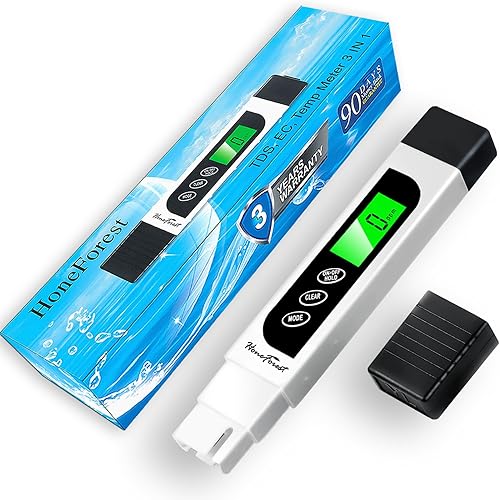
Prime HoneForest TDS Meter Digital Water Tester

Prime MEXYBE 4-in-1 TDS Meter Digital Water Tester

Prime NJTY A11 TDS Water Tester 0-9990 ppm
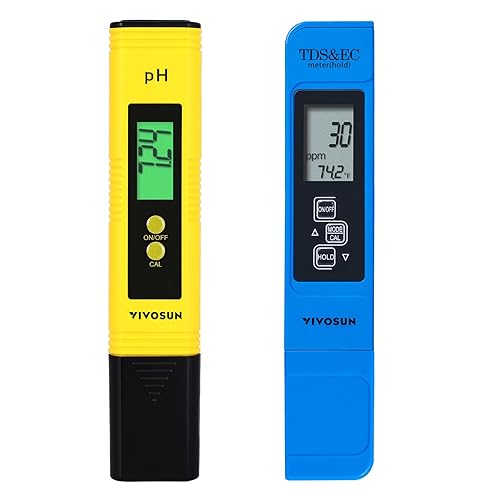
Prime VIVOSUN pH and TDS EC Meter Combo Kit 0.01
As an Amazon Associate we earn from qualifying purchases. Product prices and availability are accurate as of the date/time indicated.
Pros
- Large dual color backlit display is easy to read day or night
- Lightweight pocket design at only 1.76 ounces for portable testing
- Long battery life with efficient CR2032 cell and auto shutoff
- Wide 0 to 9999 ppm range covers drinking water, hydroponics and pools
Cons
- 40 ppm color alert threshold is conservative and may flag safe mineral water as caution
- Measures TDS, EC and temp only, no pH, chlorine or hardness specific tests
- Uses CR2032 coin battery which is less common than AAA in some households
The EKOOTIMO 4-in-1 TDS Meter is a compact digital water quality tester that measures TDS, EC and temperature. It is designed for families checking drinking water, plus hydroponic growers, aquarium owners, pool users and anyone with an RO system.
Its standout feature is the large LCD with smart green and red backlighting for instant results. Green means water under 40 ppm is ready to drink, while red signals you should filter or investigate further. With a 0 to 9999 ppm range and one tap switching, daily checks take just seconds.
Build quality focuses on practical durability with a tough ABS shell and non slip grips for wet hands. The titanium probe and dual core processor provide fast, stable readings, and the included CR2032 battery with auto shutoff supports long term daily use.
The main limitation is scope, since it does not test pH, chlorine or other contaminants. The 40 ppm alert is also very strict, so healthy mineral or spring water may trigger a red warning even when safe.
Overall, this is a simple, portable and user friendly tester for everyday water confidence. If you want quick TDS, EC and temp checks without complex calibration, it is a smart pick for home, hobby and travel use.
Model: EKOOTIMO a4, Dimensions: 4.1 x 1.18 x 0.59 inches, Weight: 1.76 ounces. Range: 0 to 9999 ppm for TDS, with EC and temperature in Celsius and Fahrenheit.
Probe: rugged titanium sensor with smart chip and dual core processor. Power: 1 x CR2032 coin cell included with auto shutoff. In the box: tester, battery, manual and packaging.
For drinking water, dip to verify tap, filtered, bottled or well water before drinking. Green backlight gives peace of mind, red tells you to change filters or use RO water.
For hydroponics, aquariums, pools and RO systems, use EC and TDS readings to track nutrient strength and filter performance. Rinse probe after each use and store dry for lasting accuracy.
Pros
- Fast one-button testing for TDS, EC and temperature
- Durable titanium probe with lightweight, pocket friendly design
- Clear backlit LCD with auto-off to save battery
- Complete starter kit with batteries and TDS interpretation guide
Cons
- Measures TDS and EC only, does not test pH, chlorine or specific contaminants
- No calibration solution or storage case mentioned in the kit
- Small handheld display can be hard to read in bright outdoor light
The Varify TDS-4-V1 is a handheld 4-in-1 digital water tester designed to measure Total Dissolved Solids, Electrical Conductivity and temperature. It is built for homeowners, aquarium owners, hydroponic growers and anyone using RO or filtration systems who wants quick insight into water quality.
In real world use, it delivers TDS, EC and temperature readings within seconds with simple one-button operation. The backlit LCD is clear indoors and the included downloadable TDS guide helps beginners understand what the numbers mean for drinking water and tanks.
Design is compact, lightweight and pocket friendly at just over 2 ounces, so it is easy to store near the sink or carry to the grow room. The titanium alloy probe feels durable and corrosion resistant, while auto-off helps preserve battery life between tests.
It is important to know this is a screening tool, not a lab instrument. It does not measure pH, chlorine, lead or other specific contaminants, and accuracy depends on proper dipping technique and clean probe care.
Overall, the Varify meter is a practical, easy to use tester for routine water checks. If you want an affordable way to monitor filter performance and spot changes in your water, it is a smart addition to your kit.
Model: Varify TDS-4-V1, Brand: Varify, ASIN: B0F8Y74QSN. Functions: TDS, EC and temperature in Celsius and Fahrenheit.
Probe: Titanium alloy sensor with handheld digital design, backlit LCD, one-button operation and auto-off function.
Package: Includes TDS meter, batteries and quick-start guide with downloadable TDS reference guide. Dimensions: 7.48 x 1.97 x 0.83 inches, Weight: 2.11 ounces.
Best Use: Drinking water, RO systems, aquariums, hydroponics, pools and home filtration monitoring.
Pros
- Accurate and stable readings thanks to titanium probe and smart chip
- Easy to use with instant auto-lock results and backlit display
- Versatile for drinking water, filters, aquariums, hydroponics and pools
- Compact, lightweight and portable with included protective case
Cons
- Plastic body feels basic compared to premium lab instruments
- Limited to TDS, EC and temperature, does not test pH or other parameters
- Battery powered so batteries will need periodic replacement
The HoneForest HFTDS-M7 is a compact 3-in-1 digital water tester that measures Total Dissolved Solids, Electrical Conductivity and temperature. It is designed for homeowners, aquarium keepers, hydroponic growers and anyone using an RO or DI filtration system.
With a range of 0 to 9990ppm, a titanium alloy probe and an intelligent stabilizing chip, it delivers fast and consistent readings. Just stir gently in water and the auto-lock function freezes the stable result on the large backlit LCD within seconds.
Weighing just 1.62 ounces with a slim 6.3 inch plastic body, it feels light and portable for everyday carry. The included leather pouch, clear display and automatic shutoff after 2 minutes make it convenient for kitchens, labs and field use.
It focuses only on TDS, EC and temperature, so you will still need a separate tester for pH or other parameters. The plastic housing is functional but not premium, and like all battery powered testers it will need occasional battery changes.
Overall, this is a simple, reliable and user friendly tool for quick water quality checks. If you want an affordable way to verify drinking water purity, check filter performance or maintain aquariums and pools, it is a smart addition to your kit.
Model HoneForest HFTDS-M7 in White, compact tester for TDS, EC and Temperature in F and C.
Measurement range 0 to 9990ppm with titanium alloy probe and intelligent chip for stable accuracy.
Large backlit LCD with auto-lock function and 2 minute auto shutoff to save power.
Battery powered design, dimensions 6.29 x 1.14 x 0.59 inches, weight 1.62 ounces, plastic construction.
In the box you get 1 x TDS Meter, instruction manual, portable leather bag and color box.
Pros
- Accurate and consistent readings that match other meters in real world tests
- Simple operation with clear backlit display, great for seniors and beginners
- Lightweight, portable design ideal for home, travel, camping and aquarium maintenance
- Wide application range from tap and filtered water to pools and hydroponics
Cons
- Probe may need rinsing with RO or distilled water after use to maintain accuracy
- Plastic housing feels lightweight and less premium than lab-grade meters
- No calibration solution mentioned for long-term recalibration
The MEXYBE 2026 All-New 4-in-1 TDS Meter is a compact digital tester designed for fast home water quality checks. It measures TDS, EC and temperature, making it a practical tool for families, aquarium owners, hydroponic growers and anyone using RO or DI filtration.
In real world use, it delivers quick and consistent readings across drinking water, tap water and aquariums. Users report results that closely match other meters, with easy switching between Celsius and Fahrenheit and auto-lock to freeze the reading for convenience.
The design focuses on ease of use with a 25 percent larger backlit LCD that stays readable in low light. It is lightweight and pocket sized with hold function, factory calibration and auto-off after 2 minutes, plus a handy color TDS chart printed on the back.
It is not a lab grade instrument, and the lightweight plastic body can feel basic with extended use. Like most conductivity testers, the probe benefits from rinsing with clean water after testing salty or nutrient rich samples to keep readings stable.
Overall, this is a reliable, beginner friendly tester for everyday water safety checks and filter monitoring. If you want an affordable and simple way to verify drinking water, aquarium or pool quality, it is a smart addition to your kit.
Model: MEXYBE A2 4-in-1 TDS Meter
Functions: TDS, EC, Temperature in Celsius and Fahrenheit
Measurement Range: 0-9999ppm
Display: Large backlit LCD with hold and auto-lock
Probe: Titanium alloy sensor with high-precision chip
Size and Weight: 3.94 x 3.15 x 1.18 inches, 3.53 ounces
Pros
- Ready to use out of the box with no manual calibration required
- Clear backlit display is easy to read in low light with intuitive color indicators
- Wide testing range covers drinking water, RO systems, pools and hydroponics
- Lightweight portable build with auto shut-off for everyday convenience
Cons
- Measures total dissolved solids only and cannot identify specific contaminants
- Fixed 50 ppm color threshold may show red for healthy mineral water
- Requires careful handling, probe must be dried after use and kept under 104F
The NJTY A11 is a compact digital TDS tester designed for quick checks of drinking water quality at home or on the go. It is a great fit for RO system owners, travelers, aquarium keepers and families who want simple insight into tap or bottled water.
Its standout feature is the color-coded backlit display that turns green under 50 ppm and red at 50 ppm or above for instant visual feedback. The factory-calibrated probe reads from 0 to 9990 ppm quickly, and the HOLD button locks the result once stable for easy reading.
The meter is pocket sized at 5 inches long and weighs less than an ounce, so it fits easily in a kitchen drawer or travel kit. Operation is simple with one power button, clear immersion marks and auto shut-off after one minute to save battery life.
Like all TDS meters, it measures total dissolved solids and does not tell you which minerals or contaminants are present. The 50 ppm color threshold is helpful for RO water but can show red for normal mineral or spring water, so context matters.
Overall, the NJTY A11 is an easy, portable tool for routine water monitoring across home, pool, aquarium and hydroponic use. If you want fast, no-calibration TDS readings with clear visual alerts, it is a practical everyday choice.
Measurement Range: 0 to 9990 ppm for tap, bottled, RO/DI and mineral water
Display: Large auto-backlit LCD with green indicator under 50 ppm and red indicator at 50 ppm or above
Functions: One-button operation with HOLD lock and 1-minute auto shut-off
Power: 2 x LR44 batteries included, install with positive side facing left
Size and Weight: 5 x 0.8 x 0.5 inches, 0.634 ounces, Model A11
Pros
- Affordable 2-piece kit covers pH, TDS, EC and temperature in one purchase
- Fast readings with 0.01 pH resolution and full 0-14 range
- Lightweight, portable design with protective case included
- Comes with calibration buffers for easy setup
- Versatile for hydroponics, aquariums, pools and home water testing
Cons
- pH probe requires regular calibration to stay accurate
- TDS meter is not suitable for seawater testing
- Basic plastic build feels less durable than professional lab meters
The VIVOSUN Digital pH and TDS EC Meter combo is built for home growers, aquarium keepers and pool owners who need quick water quality checks. It pairs a dedicated pH tester with a 3-in-1 TDS, EC and temperature meter to cover the basics in one kit.
The pH meter covers the full 0 to 14 range with 0.01 resolution for precise nutrient and water adjustments. The TDS meter reads 0 to 9990 ppm and 0 to 9990 us/cm with temperature in Celsius and Fahrenheit, which is useful for hydroponics, RO water and general testing.
Both meters use a lightweight, handheld pen design that is easy to carry, dip and read. Each comes with a protective case plus three pH calibration buffers, so you can calibrate and start testing right away.
Like most budget pen meters, the pH probe needs frequent calibration to stay accurate, especially with heavy use. The TDS meter also cannot test seawater, so marine aquarium users will need a different tool.
For everyday hydroponic, aquarium, pool and drinking water testing, this VIVOSUN kit offers solid value and convenience. It is best for beginners and home users who want simple, portable meters without investing in lab grade equipment.
Brand: VIVOSUN, Unit Count: 2 meters including pH meter and 3-in-1 TDS meter.
pH Range: 0 to 14 with 0.01 resolution for reliable and quick readings.
TDS Range: 0 to 9990 ppm, EC Range: 0 to 9990 us/cm, Accuracy +/- 2 percent.
Temperature Range: 0.1 to 80.0C and 32.0 to 176.0F. Note: Not for seawater testing.
Recommended Uses: Aquarium, hydroponics, swimming pool, home drinking water and lab water quality testing.
Matching Gear to Your Tank
If your Taiwan Bee tank is new or was recently rescaped on active soil, prioritize speed and readability. You will be dipping often, sometimes daily, to watch source water, fresh mix, and tank water move together. A straightforward backlit pen like Varify TDS Meter Digital Water Tester for Drinking fits this phase well because it covers TDS, EC, and temperature with one button and a clear display. Keep a small logbook by the tank and record all three numbers plus water change volume. When the pattern flattens for two to three weeks, you can safely test less.
If you run an established breeding colony on RO plus remineralizer, prioritize repeatability and batch checking. Your core job is to make every jug match the last one, then confirm the tank has not crept up from evaporation or feeding. A compact factory calibrated option like NJTY A11 TDS Water Tester, 0-9990 ppm suits this routine because it is quick for jug checks and tank spot checks, with hold and auto shutoff that help you log without rushing. Test each new jug before it goes in, test the tank weekly, and add an extra check after top offs, filter cleaning, or any molt or berried female issues. This pen is not ideal if you want pH in the same tool, since it stays focused on TDS style checks.
If you want fewer gadgets and also track pH during cycling or after soil changes, consider a combo set. A two meter kit like VIVOSUN Digital pH Meter TDS EC Meter for Water gives you a pH pen plus a 3 in 1 TDS, EC, and temperature pen with a protective case and calibration buffers for pH. That pairing helps when you are learning how new soil, CO2, or botanicals shift pH while TDS stays fairly flat. The tradeoff is more upkeep, since the pH side needs careful calibration and storage while the TDS side stays simple. If you will not maintain the pH probe, you should not buy a combo just for TDS.
Common Mistakes
Mistake one is testing only the tank and skipping source water. Many Taiwan Bee problems start in the jug, not the glass box. RO membranes age, DI resin exhausts, and tap blends drift by season. Always test your RO before remineralizing, test again after mixing and resting, then test the tank. If the jug is off, you will chase the tank forever.
Mistake two is trusting a single dip taken too fast or in a dead spot. Pens need a gentle stir and a moment to lock, and surface film or substrate pockets can skew one sample. Rinse the probe in clean water, dip mid water away from the filter outflow, stir softly, wait for the hold or lock, and repeat once if the number jumps. Wipe and dry after, and do not test right after your hands were in the tank with food or conditioners.
Mistake three is treating TDS as a full mineral profile. Two tanks can share the same TDS with very different GH, KH, and pH, especially when soils, botanicals, or different remineralizers are involved. Use the pen for frequency and trend spotting, then confirm with GH and KH drop tests when you see drift, after livestock or plant changes, or monthly in breeding tanks. Skipping that second layer is how keepers do frequent water changes with the wrong mineral balance.
My Experience
I run a small Caridina setup with Taiwan Bee mixes on RO that I remineralize in jugs, and I learned to keep the meter next to the jugs instead of under the stand. I test RO first, then the mixed jug after it rests, then the tank before a water change, and I jot TDS, EC, and temp in a notebook. When I followed that order every time, my batches got far more consistent and I stopped making panicked midweek changes. The habit mattered more than the model.
Who Should Wait or Buy Differently
If you do not yet use RO water or you are still deciding between Neocaridina and Caridina, a TDS pen alone is not the right choice to fix unstable water. A pen is not ideal for keepers who need to raise or lower GH and KH without a remineralizer, active soil, and a reliable source, because you will see numbers move without a way to steer them. In that case pause the meter purchase, sort out source water and substrate first, and choose a kit that pairs TDS with GH and KH testing so your first readings actually guide action.
Frequently Asked Questions
How often should I test TDS for Taiwan Bee in a stable tank?
For a stable colony, weekly tank checks plus a check of every remineralized jug before use is a solid baseline. Add an extra dip after large top offs, filter maintenance, new livestock or plants, or if you see failed molts or lethargy. New or drifting tanks need more frequent checks until the trend line stays flat.
Should I test TDS, EC, or both?
Test both if your pen offers it, since most models here include TDS, EC, and temperature together. TDS is handy for quick logging, while EC helps you confirm your remineralized batches match each other. Log them side by side for a month and you will quickly see your normal pairing.
Can a TDS pen replace GH and KH kits for Taiwan Bee?
No, it complements them but does not replace them. The pen is perfect for frequent trend checks because it is fast and inexpensive to run. Use GH and KH drop tests to confirm mineral balance when the pen drifts, when you change soils or salts, or on a regular schedule for breeding tanks.
Write Your Review
No reviews yet. Be the first to share your experience!