

If you are learning how to test gh and kh for shrimp tank for 10 gallon setups, you are really choosing between speed and precision. A 10 gallon tank feels stable, but GH and KH can still swing after water changes, new active soil, or remineralizing RO water, and shrimp feel those swings during molting.
Your decision comes down to four variables: shrimp species and hardiness, tank size and water volume, current water parameters and water source, and budget for ongoing testing. This guide walks through those variables so you can pick the right tool, and you can browse more options in our Water Test Kit guides as you compare.
What Actually Matters
For shrimp, GH and KH testing is not about owning the biggest kit. It is about getting a reading you can trust, repeating it the same way each time, and knowing when to act and when to leave the tank alone.
Test Method: Strips Versus Drop Titration
Dip strips are built for speed. You dip the strip for 2 seconds, hold it horizontally for about 30 seconds, then compare pads to a color chart. That is ideal when you want a quick snapshot of pH, GH, KH, nitrite, nitrate, and chlorine in one pass.
Drop titration kits work differently. You add solution drop by drop to a test tube until the color changes, and you count the drops. It takes longer, but it is easier to see small shifts in GH and KH, which matters when you are remineralizing RO water or keeping more sensitive Caridina. Many keepers use strips for quick checks and a drop kit for weekly monitoring and when water or shrimp problems appear.
Resolution and Readability Where Shrimp Live
Shrimp live in fairly narrow hardness windows, so readability is everything. Look for distinct pads with reduced color bleeding, a full color chart with clear steps, and instructions that separate timing for different pads. For example, some kits ask you to read most pads after 30 seconds but wait about 2 minutes or 180 seconds for the ammonia pad, and that timing changes the result if you rush it.
If you struggle to tell two close shades apart, you will struggle to make good decisions. Keepers commonly report that strips can read a little high or low on GH and KH compared to titration, especially under warm room light. If your colony is breeding well and molts look clean, a strip is often enough. If you are adjusting minerals or seeing failed molts, choose the method with the clearer endpoint.
Panel Coverage Beyond GH and KH
GH and KH alone do not tell the whole story in a 10 gallon tank. New tanks need ammonia, nitrite, and nitrate tracking during cycling, while established tanks benefit from pH, total alkalinity and carbonate, chlorine, copper, and iron awareness. That is why you will see 8-in-1, 9-in-1, and 11-in-1 strip panels that bundle Total Hardness (GH) and Carbonate (KH) with those other parameters.
Choose coverage based on your setup. A new 10 gallon with tap water and active soil needs broad coverage for cycling and water conditioner checks. An established RO-based shrimp tank needs focused GH and KH accuracy plus occasional TDS and pH confirmation. Our comparison of best test kit for shrimp tanks with GH, KH and TDS compared is useful if you want to pair hardness testing with a TDS pen routine.
Routine Fit, Shelf Life, and Strip Count
A 10 gallon shrimp tank is small enough to test often without wasting much water, but only if the kit fits your habit. Higher count packs with over a hundred strips suit twice weekly checks or fishroom use, while a 50 strip bottle is easier to keep fresh if you test less often. Makers often recommend using strips within their stated freshness window after opening and storing them sealed away from moisture, so do not buy bulk if you will not use it.
To show what that range looks like in practice, here are a few options that show the range from focused drop kits to broad strip panels:
This article contains affiliate links. If you buy through one of our links, Shrimpyo may earn a commission at no extra cost to you. Commissions never influence which products we recommend or how we rank them. Read our Affiliate Disclosure for details.
Quick Picks at a Glance

Prime HOVIRAN 11-in-1 Aquarium Water Test Strips
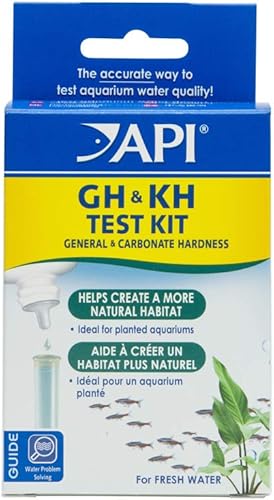
Prime API GH & KH Freshwater Aquarium Water Test Kit

Prime SaltyShrimp Shrimp Mineral GH/KH+ 100g

Prime SJWAVE 11-in-1 Aquarium Test Strips

Prime AAWipes 8-in-1 Aquarium Test Strips 50 Pack
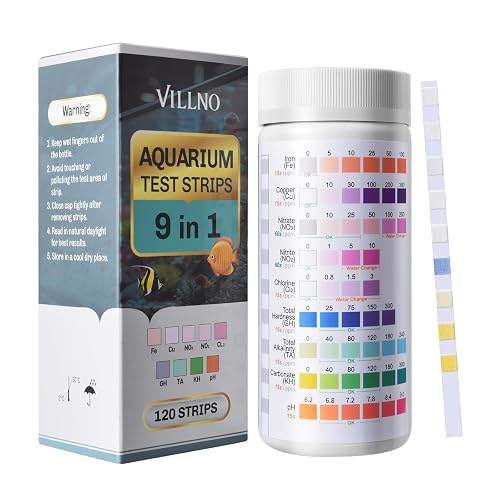
Prime VILLNO 9 in 1 Aquarium Test Strips 120 Count
As an Amazon Associate we earn from qualifying purchases. Product prices and availability are accurate as of the date/time indicated.
Pros
- Complete 11 in 1 coverage including ammonia, so no need for multiple separate kits
- Generous 125 count supply ideal for new tank cycling and multi tank households
- Quick and beginner friendly workflow with clear timing and visual chart
- Compact, lightweight bottle that is easy to store and handle during water changes
Cons
- Ammonia test requires cutting pads and using a fresh sample, which adds an extra step
- Color strip readings are visual and may be less precise than liquid test kits for critical cases
- Strips must be kept dry and handled carefully to avoid moisture damage or misreading
The HOVIRAN AQUA11 is an 11-in-1 aquarium test kit with 125 strips designed for freshwater tanks, betta habitats and ponds. It targets beginners cycling a new tank as well as experienced keepers who test frequently.
Each strip checks pH, alkalinity, KH, GH, chlorine, nitrate, nitrite, ammonia nitrogen, iron, copper and more. In practice, you get the first ten readings in about 30 seconds, plus a separate ammonia reading in two minutes for faster response to water issues.
The strips use an upgraded pad layout to reduce color bleeding between zones for clearer comparison to the chart. The bottle format is compact and lightweight for storage near the tank, and the full color chart keeps matching simple.
The tradeoff is a two step method where you must cut off used pads and re-dip for ammonia with a fresh sample. Like all strip kits, color matching is visual and less precise than liquid titration for borderline readings.
Overall, this is a practical all-in-one choice for routine monitoring and quick checks. If you want broad coverage with ammonia included and plenty of strips on hand, it delivers strong convenience and value.
Brand and Model: HOVIRAN AQUA11 aquarium test kit
Count: 125 strips, each measures 11 parameters
Parameters: pH, total alkalinity, carbonate KH, total hardness GH, total chlorine, sodium chlorine, iron, copper, nitrate, nitrite, ammonia nitrogen
Compatibility: Freshwater aquariums, betta and shrimp tanks, goldfish tanks, ponds
Size and Weight: 6.22 x 2.28 x 2.24 inches, 4.2 ounces
For the first 10 pads, dip the strip from pH to nitrite in the water sample for 2 seconds, then hold it horizontally for 30 seconds and compare colors to the chart.
For ammonia, cut off the used pads, collect a fresh water sample, dip the remaining ammonia pad for 2 seconds, hold horizontally for 2 minutes, then read the result.
Keep the bottle sealed, avoid touching pads, test in good light and retest after water changes or when fish show stress.
Pros
- Tests two critical hardness parameters in one convenient kit
- Easy drop test format with visible color change, no strips or lab needed
- Helps maintain stable pH and healthy conditions for sensitive freshwater species
- Compact, long lasting kit from a trusted aquarium brand with proven formulas
Cons
- Freshwater only, not suitable for saltwater or reef hardness testing
- Does not test pH, ammonia, nitrite or nitrate, so additional kits are needed for full water panel
- Reading drop count and color change takes practice and good lighting for accuracy
The API GH and KH Test Kit is a dedicated freshwater hardness test designed for aquarists who want stable, healthy water. It is ideal for beginners and experienced keepers of tropical community tanks, cichlids, goldfish and planted setups where mineral levels matter.
Its standout strength is dual testing for general hardness and carbonate hardness in one box. The drop count method gives clear, actionable readings that help you adjust water to match natural habitats and avoid dangerous pH swings linked to low KH.
In real world use, the kit is quick and economical for weekly checks or troubleshooting. You simply fill the test tube, add drops one at a time and watch for the color change, which makes it easier to track trends over time than test strips.
The build is simple and practical, with two solution bottles, two capped glass test tubes and easy instructions. While accurate, it requires careful counting, good lighting and thorough tube rinsing, and it covers hardness only so you will need other kits for a complete water profile.
Overall, this is a must have tool for any freshwater aquarist focused on prevention and stability. If you want healthier fish, stronger plants and fewer surprises, this compact kit delivers reliable insight with minimal effort.
This kit includes one GH test solution bottle, one KH test solution bottle, two capped test tubes and printed instructions. It is formulated for freshwater aquariums only and measures both general and carbonate hardness by drop count.
Size is 2.5 oz total with compact packaging for easy storage near your aquarium stand. The model is API General and Carbonate Hardness Kit 58 from Mars Fishcare.
For best results, use for weekly monitoring and whenever fish show stress, plants struggle or after water changes. Rinse tubes thoroughly between tests and store bottles tightly closed in a cool, dry place.
Test GH and KH weekly to monitor water quality and prevent stressful conditions for fish and plants. Regular testing helps you catch invisible mineral imbalances before they cause health issues.
Fill the provided test tube with aquarium water, add the test solution drop by drop while counting and shaking gently. Record the number of drops where the color changes completely, then compare to the included chart.
If KH reads low, take steps to stabilize buffering to avoid sudden pH shifts. If GH does not match your species needs, adjust gradually with appropriate water conditioning and retest to confirm stability.
Pros
- Raises GH without increasing KH, perfect for Caridina softwater species
- Promotes stronger molting, color intensity and breeding success
- pH neutral formula keeps sensitive shrimp stable in RO water
- Easy to dose powder with long lasting 100g supply
- Also benefits plants, snails and biofilter health
Cons
- Only for softwater setups, not ideal for Neocaridina that need higher KH
- Requires RO, distilled or rainwater plus a GH test kit for best results
- Powder must be fully dissolved before adding to avoid localized spikes
SaltyShrimp Shrimp Mineral GH/KH+ 100g is a specialized remineralizer designed for Caridina shrimp keepers using RO, rainwater or fully desalinated water. It is built for bee shrimp, bumblebee shrimp, tiger shrimp and crystal shrimp that thrive in soft, low KH environments.
Its standout strength is precision mineral balance. It raises total hardness to around 6 dGH while keeping carbonate hardness near zero, so pH stays stable. Users report stronger molts, deeper coloration and more consistent breeding when dosed correctly.
The fine powder dissolves cleanly and comes in a compact 100g jar that stores easily and lasts through many water changes. Dosing is simple with one level spoon per 10 liters, which makes routine RO prep fast and repeatable.
It is not a universal conditioner, since tanks needing higher KH for Neocaridina or livebearers will need a different product. You will also need a GH test kit and pure source water to get the best results, as tap water can throw off the balance.
For dedicated Caridina breeders and softwater planted shrimp tanks, this is a top tier choice. It delivers stable water chemistry, healthier shrimp and a more resilient ecosystem with minimal effort.
Brand: SALTYSHRIMP by Salty Shrimp, Model SSM-NSM-100 for aquarium water treatment.
Form: Fine dissolving powder, 100g jar dosed at 2g per 10 liters for 6 dGH.
Use: Remineralize RO, rainwater or fully desalinated water for shrimp, snails, crayfish and softwater fish.
Add one level measuring spoon, about 2g, per 10 liters of RO or desalinated water to reach approximately 6 dGH.
Stir or aerate until fully dissolved, then test GH before adding to the aquarium for stable parameters.
Use with each water change and avoid mixing with tap water unless you monitor GH and KH closely.
Pros
- Covers ammonia plus 10 other parameters, more comprehensive than basic 5-in-1 or 6-in-1 strips
- Very fast and beginner friendly dip and compare process, ideal for weekly checks and multi-tank homes
- Split bottle plus sealed bag packaging helps keep spare strips fresh for longer term use
- Sturdy, low odor strips with clear color development reported as easy to read and tank friendly
- Includes thermometer and educational eBook for added value for new hobbyists
Cons
- Provides quick snapshot readings, not as precise as liquid reagent kits for critical cycling or illness diagnosis
- Nitrite and nitrate pads may need extra time to fully develop, so timing and lighting matter for accuracy
- Opened strips should be used within about 3 months for best accuracy, which requires consistent testing routine
The SJWAVE 11-in-1 Aquarium Test Strips kit is an all in one water monitoring system for freshwater and saltwater aquariums, betta tanks and ponds. It is designed for beginners, busy hobbyists and multi-tank owners who want fast routine checks without liquid kits or store visits.
Standout coverage includes ammonia, pH, nitrite, nitrate, free chlorine, total hardness, carbonate, total alkalinity, copper, iron and temperature. In real world use, most readings develop in under a minute with clear color changes that make weekly monitoring simple and stress free.
Build quality is a pleasant surprise, with sturdy pads that hold up in water and resist getting soggy like cheaper strips. The kit splits 150 strips between an everyday bottle and sealed refill bags, plus color charts, testing tubes, a thermometer and an instructional eBook.
Drawbacks are typical for strips. They are excellent for trend spotting but less precise than liquid tests for exact cycling measurements. Some pads, especially nitrite and nitrate, need a full minute to settle, so rushing or reading too late can skew interpretation.
Final verdict: for convenient, comprehensive at home water awareness, this is a smart, value packed choice. Keep a liquid kit on hand for emergencies, and use these SJWAVE strips as your go to early warning system for a healthy aquatic family.
Kit Type: 11-in-1 freshwater and saltwater aquarium test strips with separate ammonia strips, color charts, testing tubes, thermometer and eBook guide.
Parameters Tested: Ammonia, pH 6.0 to 8.0, nitrite, nitrate, free chlorine, total hardness GH, carbonate KH, total alkalinity, copper, iron and temperature.
Count and Storage: 150 strip supply in bottle plus sealed bags to maintain freshness. For best accuracy, use opened strips within 3 months and store sealed in a cool, dry place.
Pros
- Tests 8 key parameters at once, including ammonia
- Very easy to use for beginners with quick results
- Works across aquariums, ponds, shrimp tanks and pools
- Sealed bottle protects strips from moisture
- Great for routine twice weekly monitoring
Cons
- Ammonia pad needs a separate dip and 180 second wait, which adds extra timing
- Colors can shift if not read at the exact time, so technique matters
- Hardness and pH color matching can be subjective compared to liquid test kits
The AAWipes K02-50 is a 50-count 8-in-1 test strip kit designed for freshwater aquariums, saltwater tanks, ponds and shrimp setups. It is ideal for beginners and busy hobbyists who want quick routine checks without lab work or liquid reagents.
Each strip measures free chlorine, nitrate, nitrite, hardness, sodium chloride, total alkalinity, pH and ammonia nitrogen. In real world use, owners find the strips helpful for catching early imbalances, especially in smaller tanks that need frequent monitoring.
The strips use high quality fiber paper with non-bleeding color pads for clearer comparison to the bottle chart. They come in a well sealed bottle that protects against moisture and helps maintain reliability during storage.
Accuracy depends on technique, as pads 1 to 7 read at 30 seconds while the ammonia pad needs a separate dip and 180 second wait. Some users report ammonia readings staying low or colors drifting if read late, so careful timing and good lighting are important.
Overall, this is a convenient and beginner friendly kit for regular water monitoring and peace of mind. If you need lab grade precision, pair it with a liquid kit, but for fast weekly checks it delivers strong ease of use and coverage.
Start with clean, dry hands and do not touch the test pads. Dip pads 1 to 7 in the tank water for 2 seconds, then dip the ammonia pad separately for 5 seconds as directed.
Remove the strip without shaking off excess water and hold it horizontally. Read pads 1 to 7 after 30 seconds, then wait a full 180 seconds to read the ammonia pad.
Compare each pad color to the chart on the bottle under natural light for best accuracy. Test at least twice per week, after water changes, or when fish show signs of stress.
Pros
- Wide 9 parameter coverage including iron and copper for more complete monitoring than basic strips
- Quick 60 second results praised by users as easy to read, fast and convenient
- Beginner friendly with simple dip and match process and no extra equipment needed
- Large 120 count pack ideal for frequent testing in single or multiple tanks
- Versatile for freshwater, saltwater, shrimp and turtle setups
Cons
- Color shades for pH, KH and alkalinity can look similar and be hard to interpret precisely
- Some users found readings inconsistent compared to Tetra strips when testing back to back
- Paper strips are best for routine checks, not as precise as liquid kits for cycling or disease treatment
The VILLNO 9 in 1 Aquarium Test Strips kit includes 120 strips designed for routine freshwater and saltwater monitoring. It is built for community fish keepers, shrimp breeders, turtle owners and new saltwater starters who need quick checks without lab kits.
Each strip tests iron, copper, nitrate, nitrite, chlorine, GH, alkalinity, carbonate and pH with results in about 60 seconds. Positive users praise the vibrant colors, fast read time and ability to spot issues early to protect fish and plants.
The system uses a simple dip, wait and compare method with an included color chart, so no tools or training are required. Strips come in moisture proof packaging to help maintain accuracy over long term weekly use.
Color matching can be tricky since some levels look very similar, especially for pH, KH and alkalinity. One critical review noted inconsistent readings compared to Tetra strips when tested back to back, so it is better for trend tracking than precise diagnosis.
For hobbyists who want affordable, broad coverage testing in under a minute, this 120 count kit is a practical choice. If you are cycling a new tank or treating illness, pair it with a liquid kit for confirmation.
Parameters tested: Fe, Cu, nitrate, nitrite, chlorine, GH, alkalinity, carbonate, pH
Quantity: 120 paper test strips with color chart and bottle
Compatibility: Freshwater, saltwater, shrimp, planted and turtle tanks
Read time: Dip and remove after 60 seconds, read after 30 seconds
Model: Aquarium Test Strip with 12 month warranty
Dip one strip into aquarium water, remove after 60 seconds and hold it horizontally without shaking.
Wait 30 seconds, then compare each pad to the included color chart in natural daylight for best accuracy.
Test weekly, before water changes and after adding livestock to track trends and keep parameters stable.
Matching Gear to Your Tank
If you run a new 10 gallon Neocaridina tank on conditioned tap water, start broad then confirm. Use 11 in 1 Aquarium Water Test Strips for fast cycling checks across pH, GH, KH, chlorine, nitrite, nitrate, and ammonia nitrogen, then confirm hardness with API GH & KH TEST KIT Freshwater Aquarium Water when the strip looks borderline. That combo keeps you from chasing a single pale pad color.
If you keep bee shrimp, tiger shrimp, or other soft water Caridina in RO water, precision matters more than panel size. Use a drop kit with test tubes for GH and KH as your source of truth before and after remineralizing, and keep strips only for quick pH and nitrogen spot checks. If you use Shrimp Mineral GH/KH+ 100g, follow the manufacturer dosing chart for that specific product, start with a smaller dose than the label suggests in a new tank, and test the water after dosing. You can learn more about pairing minerals with testing in our GH/KH Mineral + RO Water resources.
If you are a busy keeper who wants a simple habit, pick one strip type and stick with it. AAwipes 8-in-1 Aquarium Test Kit for Fish Tanks and 9 in 1 Aquarium Test Strips cover hardness, alkalinity and carbonate, pH, chlorine, nitrite, and nitrate for routine 10 gallon checks, while 11 in 1 – Aquarium Test Strips | 950 Tests adds broader coverage plus separate ammonia strips for cycling or troubleshooting. Pair any of them with a TDS pen routine explained in TDS for caridina shrimp so you catch evaporation creep between water changes.
Common Mistakes
Mistake 1 is testing at the wrong time and reacting too fast. Do not test right after a water change, feeding, or adding minerals and then immediately dose again. Wait for the tank to mix, retest with the same method and lighting, and change one thing at a time in a 10 gallon where small doses have a big effect.
Mistake 2 is misreading strips by ignoring timing and technique. Dipping too long, shaking off excess water, reading under yellow bulbs, or reading the ammonia pad at 30 seconds instead of after a few minutes can shift colors. Hold the strip horizontal to prevent bleed between pads, follow the 2 second dip and 30 second read guidance for most pads, and give ammonia its full separate wait.
Mistake 3 is remineralizing without testing before and after, or mixing products meant for different shrimp genera. A GH and KH booster for Neocaridina style water is not the same goal as a soft water bee shrimp mineral, and active soil will also pull KH down over time. Always test your source water first, dose to your target slowly, then test the tank again before adding livestock.
My Experience
I run a 10 gallon Neocaridina tank and a smaller Caridina setup, and I learned to stop trusting a single strip pad for hardness. I now do quick strip checks during the week for pH, nitrite, and nitrate, then use a drop titration kit on Sundays for GH and KH before I mix top off water, and that two step habit ended most of my surprise molting issues.
Who Should Wait or Buy Differently
If you are still cycling with no livestock, have unstable tap water with frequent work notices, or are about to switch substrate or switch to RO, a big bulk strip purchase is not ideal for you right now. It is better to wait until your water source and soil choice are settled, then buy the test method that matches that long term routine, whether that is a focused GH and KH drop kit or a broad panel for community tank monitoring.
Frequently Asked Questions
How often should I test GH and KH in a 10 gallon shrimp tank?
Test weekly once the tank is stable, plus any time you change water source, add minerals, replace substrate, or see molting or behavior issues. Many keepers do a quick strip midweek and a more careful GH and KH check on water change day.
Are strips accurate enough for shrimp, or do I need a liquid kit?
Strips are fine for trends and quick safety checks across many parameters at once. A liquid drop kit is better when you need a clearer GH and KH endpoint for remineralizing RO water or diagnosing failed molts, so many shrimp keepers own both.
Why do my GH and KH readings change after a water change?
Source water, remineralizer dose, active soil buffering, and evaporation all shift hardness in a small volume. Test your bucket before it goes in, test the tank after it mixes, and keep lighting, timing, and method consistent so you compare real changes.
Write Your Review
No reviews yet. Be the first to share your experience!