

You are trying to decide between ro water vs tap water for shrimp keeping, and that single choice affects molting, survival of babies, and how stable your tank stays between water changes. I have run both approaches on my own racks, and the best answer always comes down to four variables: your shrimp species and hardiness, your tank size, your current water parameters out of the tap, and your budget for equipment and weekly upkeep. Updated in November 2026, this buying guide gives you a clear framework so you can choose with confidence.
Tap water can be simple and low cost when it is consistent, while reverse osmosis water gives you a blank slate that you rebuild with minerals. Neither is automatically better. Neocaridina often do well on treated tap, while many Caridina bee types want soft, low buffered water that is easier to repeat with RO. If you want background reading, browse our RO System + Remineralize guides to see how storage, remineralizing, and filtration fit together.
What Actually Matters
Species First: Caridina Want Soft Stability, Neocaridina Tolerate More
Start with what you keep. Neocaridina, like cherry shrimp, were selected for adaptability and they often accept a wider range of general hardness and carbonate hardness as long as changes are slow. Keepers commonly report stable breeding colonies in conditioned tap water when chlorine and metals are handled and weekly shifts stay small. That makes tap plus a quality conditioner a reasonable starting point if your source is not extreme.
Caridina, including crystal, bee, and Taiwan Bee types, are a different story. They prefer soft water with very low carbonate buffering and steady mineral content for clean molts. Tap water with high KH, fluctuating TDS, or added chloramine can make that hard to repeat. If you aim to breed sensitive Caridina, plan from the start for purified water that you remineralize for that genus, rather than fighting your tap every week.
Tap Chemistry: Chlorine, Chloramine, Metals and Seasonal Swings
Test before you decide. City water often contains chlorine or chloramine, plus possible ammonia, nitrite, and heavy metals like copper which is risky for invertebrates. A good conditioner can neutralize chlorine, chloramine, ammonia, and metals, but you still need to know your baseline GH, KH, and TDS with a liquid kit and a TDS meter. For help thinking about measurement, see RO systems for shrimp and apply the same testing habit to tap.
Also watch for change over time. Many keepers commonly report that tap TDS and pH shift after rain, pipe work, or seasonal treatment changes by the utility. That matters because shrimp react more to sudden shifts than to a specific perfect number. If your tap tests very differently month to month, or if you see unexplained failed molts after water changes, that inconsistency alone can push you toward RO even if your average numbers look fine.
Control Versus Convenience: Cost, Space and Maintenance
Tap plus conditioner wins on simplicity. You dose the change water, match temperature, and pour slowly. There is no unit to flush, no storage barrel, and no remineralizing step. For a single small Neocaridina tank with decent tap, that lower workload often leads to better consistency because you will actually do the maintenance on schedule.
RO wins on control but adds steps. You need a filtration unit with space under a sink or for a hose connection, a clean food grade container for product water, a heater or tempering plan, and a remineralizer. Small tanks are less forgiving of mistakes because a one gallon change is a larger percentage, so RO users should mix a day ahead and verify before use. If you keep multiple tanks or breed high grade Caridina, that extra effort usually pays back in repeatable parameters.
Remineralization Path: GH Only or GH and KH Together
If you choose RO, you must add minerals back because pure water has almost nothing for shells, molting, and osmoregulation. GH only formulas add calcium, magnesium, and related ions without raising carbonate hardness or pH, which suits soft water Caridina setups with active soil. GH and KH combined formulas add buffering as well, which suits Neocaridina and other setups where you want more pH stability. Always follow the manufacturer own dosing chart for your specific product, start with a smaller dose than the label suggests in a new tank, and test the water after dosing before adding shrimp.
Do not mix approaches without a plan. Using a GH only powder and then adding a separate KH buffer, or switching between brands, can cause drifting KH and pH if you are not measuring. Pick one path for each tank based on genus, write down your scoop or milliliter dose per volume of pure water, and repeat it exactly. Stability from batch to batch matters more than chasing a textbook target you saw online.
To make the tradeoffs concrete, here are a few options that show the range from tap conditioners to RO filtration to genus specific remineralizers:
This article contains affiliate links. If you buy through one of our links, Shrimpyo may earn a commission at no extra cost to you. Commissions never influence which products we recommend or how we rank them. Read our Affiliate Disclosure for details.
Quick Picks at a Glance

Prime Crystalpro Shrimp Aqua Conditioner 125ml
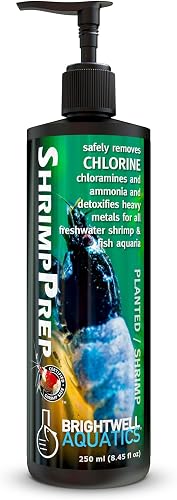
Prime Brightwell Aquatics Shrimp Prep Water Conditioner

Prime Brightwell Aquatics Caridina GH+ Shrimp

Prime Aquatic Life RO Buddie 3-Stage Reverse Osmosis

Prime AquaBoost Shrimp Mineral GH/KH+ Remineralizer
As an Amazon Associate we earn from qualifying purchases. Product prices and availability are accurate as of the date/time indicated.
Pros
- Extremely concentrated formula lasts through many water changes and top offs
- All in one protection against chlorine, ammonia and heavy metals plus trace minerals
- Gentle on juvenile shrimp, fish and snails according to user experience
- Precise dropper cap prevents waste and overdosing
Cons
- Has an unpleasant smell straight from the bottle noted by users
- Requires 30 minute wait time for full ammonia and metal neutralization, not instant
- Must dose carefully as overdosing requires a water change to correct
Crystalpro Shrimp Aqua Conditioner is a concentrated water treatment made specifically for freshwater shrimp tanks including Caridina, Neocaridina, crayfish and snails. It is built for hobbyists using tap water or RODI water who need reliable dechlorination plus mineral support in one product.
Its standout strength is the all in one formula that permanently removes chlorine, binds chloramine and ammonia, and neutralizes toxic heavy metals. In real world use, keepers report healthy juveniles, successful molts and stable tanks across regular water changes and top offs with only 1 to 2 drops per gallon.
The 125ml bottle uses a convenient drop cap for clean and precise dosing, with about 15 drops per ml and a 7ml capful measure. The liquid formula mixes easily into change water and includes binder salts, EDTA, magnesium sulphate and potassium iodide to support shrimp health.
There are a few tradeoffs to know. The solution has a strong odor in the bottle that fades once diluted, and it needs a 30 minute rest after mixing for full effect on ammonia and metals. Careful measuring is also important since overdosing is not recommended.
For shrimp keepers wanting a concentrated, mineral enriched conditioner that stretches far and simplifies water prep, this is a smart pick. It delivers dependable protection for sensitive invertebrates with minimal effort and excellent dosing control.
Brand: CrystalproAquatics, Model: Shrimp Aqua Conditioner, Volume: 125ml or 4.22 fluid ounces in liquid form.
Coverage: Treats up to 1250 gallons or 5000 liters, standard dose is 5ml for 50 gallons of change water.
Function: Removes chlorine and chloramine while binding ammonia and toxic heavy metals for freshwater invertebrate tanks.
Ingredients: Binder salts, EDTA, magnesium sulphate, potassium iodide, includes added minerals for shrimp and crayfish.
Pros
- Specifically formulated for shrimp and invertebrates, including copper detoxification
- Handles chlorine, chloramine, ammonia and nitrite in one step for fast water prep
- Phosphate and silicate free, safe for planted tanks
- Suitable for routine changes, new tank setup and emergency ammonia control
- Compact 250ml liquid is easy to dose and store for small to medium aquariums
Cons
- Freshwater only formula, not suitable for saltwater aquariums
- Concentrated liquid requires careful measuring for nano tanks
- Does not replace biological filtration or full tank cycling
Brightwell Aquatics Shrimp Prep is a liquid water conditioner designed for freshwater shrimp tanks and other sensitive aquariums. It is made for shrimp keepers, breeders and planted tank hobbyists who need tap water to be safe on contact.
The formula removes chlorine, chloramines, ammonia and nitrites while also neutralizing heavy metals like copper. In real world use, this means safer water changes, calmer livestock during new tank setup, and added protection against sudden ammonia spikes.
The 250ml bottle is compact, easy to store and simple to dose for routine maintenance. As a clear liquid with no phosphate or silicate, it blends cleanly without clouding water or disrupting nutrient balance in planted systems.
It is not a substitute for a cycled filter, and it is limited to freshwater systems only. Nano tank owners will also need to measure carefully, since a small overdose is easy with concentrated conditioners.
Overall, Shrimp Prep is a smart, targeted choice for anyone keeping cherry shrimp, caridina, snails or delicate community fish. If you want one conditioner that prioritizes invertebrate safety, this is an excellent tank side staple.
Brand: Brightwell Aquatics, Model Number: SPREP250, Item Type: Liquid water conditioner, Volume: 250 ml.
Target Species: Freshwater fish and shrimp, including community tanks, planted aquariums and breeding setups. Safe for plants and invertebrates when used as directed.
Function: Removes chlorine, chloramines, ammonia and nitrites while detoxifying copper and heavy metals. Phosphate free and silicate free formula.
Pros
- Precise GH and TDS control without affecting KH or pH
- Caridina specific mineral ratios support molting and vitality
- Suitable for both shrimp tanks and planted soft water biotopes
- Liquid form is easy to dose for setups and water changes
- Trusted American made formula from an established aquarium brand
Cons
- Provides no KH buffering, requires a separate KH+ product if KH is needed
- 250ml liquid size may run out quickly on larger or multiple tanks
- Requires GH or TDS testing for accurate dosing, less beginner friendly
Brightwell Aquatics Caridina GH+ is a liquid remineralization supplement designed for aquariums using reverse osmosis, deionized or extremely soft water. It is made specifically for Caridina Bee shrimp and soft water biotope tanks that need stable minerals without KH or pH shifts.
The formula replenishes calcium, magnesium, potassium and sodium in ratios that support molting, osmoregulation and plant growth. In practice, it gives hobbyists precise control over general hardness and TDS, which helps sensitive shrimp and forest stream fish thrive in water close to their native habitat.
As a liquid concentrate in a 250ml bottle, it is easy to dose for new setups, water changes and routine maintenance. Brightwell Aquatics manufactures in the USA with a research based approach to tropical water chemistry, and the compact bottle is convenient for storage.
The main limitation is that it contains no KH buffering, so tanks that need carbonate hardness require a separate KH supplement. You will also need a GH or TDS test kit to dose accurately, which adds a step for beginners.
Overall, Caridina GH+ is an excellent choice for shrimp keepers who use purified water and want clean, predictable GH control. If you keep Bee shrimp or soft water species and already monitor parameters, this is a reliable, plant safe solution worth adding to your routine.
Brand: Brightwell Aquatics, Model Number: CGH250, Volume: 250ml liquid formula. Item Form: Liquid water conditioner for freshwater aquariums.
Target Species: Caridina shrimp, soft water fish and planted biotopes. Purpose: Remineralize RO, DI and extremely soft water to maintain GH and TDS.
Key Trait: Raises GH without changing KH or pH. Pair with a KH+ supplement if carbonate hardness is required.
Pros
- Highly effective RO purification for healthier fish, corals and plants
- Compact, portable and lightweight at just 3.1 pounds with wall mount option
- Simple installation with no electricity required, great for beginners
- Versatile for aquariums, fountains, humidifiers and other purified water needs
Cons
- Does not remove chloramines, so extra water conditioning may be needed in some areas
- 50 GPD output and 500 PPM TDS limit may be insufficient for large tanks or very hard well water
- Cartridges need regular replacement to maintain filtration performance
The Aquatic Life RO Buddie 50 GPD is a 3-stage reverse osmosis filtration unit built for aquarium use, including freshwater, saltwater and reef tanks. It is ideal for hobbyists who want affordable, on-demand purified water without installing a bulky under-sink system.
In real world use, the sediment filter catches sand and silt, the carbon block reduces chlorine and odors, and the RO membrane removes up to 98 percent of total dissolved solids. That multi-stage process helps reduce algae issues, protects sensitive fish and corals, and provides a cleaner base for remineralization.
The design is notably compact at 7.25 x 4 x 13.75 inches and weighs just 3.1 pounds, so it fits tight stands and fish rooms. It offers wall mount installation, uses replaceable cartridges, and needs no electricity, which keeps setup simple and portable.
There are limits to consider. It does not remove chloramines, so users on treated city water may still need a conditioner. The 50 gallon per day rate and 500 PPM max TDS support are best for small to medium needs, not large high demand systems.
Overall, the RO Buddie delivers strong purification performance in a portable, beginner friendly package. If you need clean, reliable water for aquariums, fountains or humidifiers without complexity, it is a smart and practical choice.
Filtration: 3-stage reverse osmosis with sediment, carbon block and RO membrane
Performance: Up to 50 gallons per day, removes up to 98 percent of total dissolved solids, supports up to 500 PPM incoming TDS
Design: Compact portable unit, 7.25L x 4W x 13.75H inches, 3.1 pounds, wall mountable, no electricity required
Best for: Freshwater and saltwater aquariums, fish tanks, fountains, humidifiers and plant water
Model: Aquatic Life RO Buddie 540016, includes cartridge set with manufacturer warranty
Pros
- Dual action GH plus KH formula saves time versus mixing separate mineral and buffer products
- Calcium and magnesium focused blend directly supports molting, shell strength and survival
- Simple scoop dosing works well for nano tanks and small weekly water changes
- Covers Neocaridina, Caridina, Amano and Ghost shrimp in one jar for mixed collections
- Resealable jar and included spoon keep storage neat and measurements consistent
Cons
- Requires a GH/KH test kit and pure base water for accurate dosing, not ideal for tap water users
- GH and KH rise together, so it is less flexible if you need GH only for low pH Caridina setups
- 3 ounce size is best for nano and small tanks, larger fish rooms will need the bigger jar or frequent restocks
AquaBoost Shrimp Mineral GH/KH+ is a powdered remineralizer that converts pure RO, DI, reverse osmosis and distilled water into shrimp ready water. It is made for keepers of Neocaridina davidi, Caridina crystal and bee shrimp, plus Amano and Ghost shrimp in planted and breeding tanks.
Its standout feature is a combined GH and KH formula with calcium, magnesium and potassium bicarbonate in one scoop. That means stable general hardness for molting plus carbonate buffering to hold pH steady between water changes, helping reduce failed molts and support vivid color and breeding.
In practice, dosing is simple at roughly 2cc per 5 gallons of fresh pure water before a water change. You can fine tune to your test kit target for TDS, GH and KH, which gives repeatable results without tap water swings.
The blend comes in a resealable airtight jar with an included measuring scoop to keep it dry and easy to dose. The powder format is compact for nano tanks, though you will need to mix thoroughly and verify with a test kit as it is not a pour and go tank additive.
Overall, this is a practical choice for shrimp keepers starting from RO or distilled water who want GH and KH in one step. If you keep sensitive Caridina that need GH only, check your targets, but for mixed Neocaridina and community shrimp setups it covers the essentials well.
Brand: AquaBoost, Model SHMPMR3, Form: Powder remineralizer for freshwater shrimp aquariums.
Target Species: Neocaridina davidi, Caridina crystal red, bee shrimp, Taiwan bee, Amano and Ghost shrimp.
Function: Raises general hardness and carbonate hardness with calcium, magnesium and potassium bicarbonate.
Compatibility: For RO water, DI water, reverse osmosis water and distilled water. Adjust dose with GH and KH test kit.
In the Box: Remineralizer powder with measuring scoop in resealable airtight jar. Available in 3 oz and 8 oz sizes.
Start with clean RO, DI or distilled water in a separate bucket, not directly in the tank. Add roughly 2cc, one level scoop, per 5 gallons and stir until fully dissolved.
Test GH, KH and TDS and adjust slightly to hit your shrimp target before the water change. Neocaridina keepers often aim higher KH for stability while Caridina setups stay leaner.
Use the prepared water for regular water changes to avoid parameter swings. Reseal the jar after each use and store dry to prevent clumping.
Matching Gear to Your Tank
Think in scenarios, not in best overall picks. Your tank size, species, and tap report should point you to one lane. Below are three common setups I see, with example products that illustrate what to look for in each lane.
Scenario one is a Neocaridina colony on fairly good tap water. Keepers commonly report keeping 10 gallon cherry tanks this way with regular small changes. You want a concentrated conditioner that handles chlorine, chloramine, ammonia, and heavy metals including copper. Crystalpro Shrimp Aqua Conditioner Treats 1250 illustrates the concentrated style, with guidance to use 1 to 2 drops for every gallon or 5 ml for 50 gallons of change water, and notes that about 15 drops equals 1 ml. Brightwell Aquatics Shrimp Prep Shrimp Tank shows the same lane in a 250 ml bottle, formulated to remove chlorine, chloramines, and ammonia while neutralizing metals for shrimp and planted tanks. If your tap already tests moderate and steady, this lane is simple and effective.
Scenario two is a Caridina crystal or Taiwan Bee breeding tank where you need a repeatable soft water base. Here you start with RO then rebuild GH without adding KH. Aquatic Life RO Buddie 3-Stage Aquarium Water shows what a compact entry unit looks like, rated at 50 GPD with sediment, carbon block, and RO membrane stages, described as removing up to 98 percent of total dissolved solids while the carbon helps with chlorine and odors but will not remove chloramines. Pair that type of water with Brightwell Aquatics Caridina GH+ Shrimp Mineral, which is made to restore calcium, magnesium, potassium, and sodium to RO or very soft water without altering KH or pH. For deeper species context, compare notes in our best RO system for taiwan bee shrimp.
Scenario three is Neocaridina or mixed tanks on unreliable tap, or anyone who wants one RO barrel for the whole rack. You still filter to zero, but you remineralize with buffering included. Shrimp Mineral GH/KH+ Remineralizer illustrates that combined approach, adding calcium, magnesium, and potassium bicarbonate to raise GH and KH together, with a reference dose of roughly 2cc per 5 gallons and a scoop included for repeatable mixing. Plan storage ahead of time with ideas from how to choose storage for remineralized RO water, mix the night before, aerate, and verify before the water change.
Common Mistakes
Mistake one is dosing minerals too fast or into a running tank. Dumping dry powder directly with shrimp inside can create local spikes in hardness and pH that trigger failed molts. Mix in a separate bucket of RO water, stir fully, then test GH, KH, and TDS before it touches livestock, and adjust slowly over days if a tank needs correction.
Mistake two is assuming all filters and conditioners cover everything. For example, a compact carbon stage may help with chlorine and odor but will not remove chloramines, so you still need a conditioner rated for chloramine and ammonia when your city uses it. Likewise, do not assume clear water means copper free. If you keep invertebrates on tap, choose a conditioner that specifically lists heavy metal and copper neutralization and dose the change water, not the whole tank volume after the fact.
Mistake three is mixing GH only and GH plus KH products for the wrong shrimp. Using a GH and KH blend in a soft water Caridina tank with active soil can push KH and pH higher than those shrimp prefer, while using GH only for Neocaridina can leave you with almost no buffering and daily pH swings. Pick the mineral type for your genus, label your bottles, and do not swap brands mid cycle without retesting the full batch.
My Experience
I run a Neocaridina cherry tank and a small Caridina crystal tank side by side, so I use both lanes. The cherry tank stays on conditioned tap because my source tests steady most of the year and small weekly changes keep babies growing. The crystal tank gets RO water remineralized with a GH only solution, mixed in a bucket the night before, and that extra step stopped the random molting losses I saw when I tried to force tap water to behave like soft water.
Who Should Wait or Buy Differently
If your tap is already soft, steady, and shrimp safe after conditioning, and you only keep hardy Neocaridina, a full RO system is not ideal for you right now because it adds cost, storage, and mixing work without a clear benefit. It is also not the right choice to buy a remineralizer before you own a TDS meter and GH and KH test kits, since you cannot verify your dose without them. Wait, test for a month, and only move to RO when your logs show swings or when you commit to Caridina that truly need it.
Frequently Asked Questions
Can I keep shrimp on tap water with just a conditioner?
Yes, many Neocaridina colonies thrive that way when the tap is moderate and consistent and the conditioner handles chlorine, chloramine, ammonia, and metals. Test GH, KH, and TDS before the first change and again a few hours after, then keep changes small and regular. If you see seasonal swings or baby losses after water changes, consider RO.
Do I need to remineralize RO water before adding shrimp?
Yes. RO water is intentionally stripped of dissolved solids, so it lacks the calcium and magnesium shrimp use for shells and molting. Choose a GH only formula for soft water Caridina or a GH and KH formula for Neocaridina that need buffering, then follow the maker chart, start low, and test after mixing.
How do I switch a tank from tap to RO without stressing shrimp?
Do it gradually over several weeks with small water changes, not all at once. Mix and remineralize each batch to your target, match temperature closely, and drip the new water in slowly. Track TDS, GH, and KH each time so the shift stays smooth and berried females and shrimplets are not shocked.



Write Your Review
No reviews yet. Be the first to share your experience!