

Quick answer: Best for Caridina keepers is API Freshwater Master Test Kit 800-Test Freshwater because it covers pH, ammonia, nitrite and nitrate in 800 checks per vendor spec, which helps you hold soft acidic water near pH 6.0 per breeder consensus.
Your Crystal Reds slow down, berried females drop eggs, and pH drifts as buffering soil ages through 2026. This roundup compares 8 options per our comparison to help Caridina keepers match low range color reading, mineral context and meter convenience, starting with our Caridina water care guide for background.
This article contains affiliate links. If you buy through one of our links, Shrimpyo may earn a commission at no extra cost to you. Commissions never influence which products we recommend or how we rank them. Read our Affiliate Disclosure for details.
Quick Picks at a Glance

Prime API Freshwater Master Test Kit 800-Test for pH
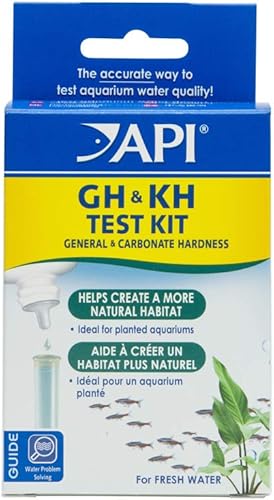
Prime API GH & KH Freshwater Aquarium Water Test Kit

Prime API High Range pH Test Kit for Freshwater

Prime AAwipes 8-in-1 Aquarium Ammonia Test Strips 25

Prime AAWipes 8-in-1 Aquarium Test Strips 50 Pack

Prime AAWipes 8-in-1 Aquarium Ammonia Water Monitoring

Prime Pawfly 5-in-1 Aquarium Water Test Kit

Prime GAINEXPRESS Digital pH & Temperature Monitor
As an Amazon Associate we earn from qualifying purchases. Product prices and availability are accurate as of the date/time indicated.
Pros
- Covers all five vital freshwater parameters in one kit instead of buying separate tests
- Large 800 test capacity supports weekly testing for months
- Liquid reagent method is more precise than quick dip strips
- Clear instructions and laminated color card make results easy to read and act on
Cons
- Freshwater only, not compatible with saltwater or reef aquariums
- Liquid testing takes more time and steps than test strips
- Color matching can be difficult in poor lighting and requires careful timing
The API Freshwater Master Test Kit is an all in one liquid testing system for freshwater aquariums. It is ideal for owners of tropical community tanks, cichlids and goldfish who need dependable weekly checks to keep fish healthy.
The kit measures pH, high range pH, ammonia, nitrite and nitrate, the five levels most linked to fish stress and loss. In real world use, the liquid reagents give clear color changes that help you spot ammonia spikes or nitrate buildup from waste and uneaten food.
Inside the box you get seven reagent bottles, four capped test tubes, a holding tray and a computer calibrated laminated color card. The components feel sturdy and practical, and the card holds up well to repeated use around water.
The main tradeoff is that liquid testing takes a few minutes per parameter and requires careful measuring and color comparison. It is also freshwater only, so saltwater keepers will need a different kit.
Overall, this is one of the best value choices for freshwater fishkeepers who want accuracy without guesswork. If you test weekly and follow the action recommendations, it helps maintain balanced water and a safer tank environment.
Includes 7 testing solution bottles, 4 test tubes with caps, holding tray and laminated color card. Designed for weekly monitoring and troubleshooting when water or fish problems appear.
Tests pH, high range pH, ammonia, nitrite and nitrate. Capacity up to 800 tests. For freshwater aquariums only, including tropical community fish, cichlids and goldfish.
Product dimensions 9.13 x 3.5 x 4.65 inches. Item weight 1.15 pounds. Model number 34. Manufacturer Mars Fishcare.
Pros
- Tests two critical hardness parameters in one convenient kit
- Easy drop test format with visible color change, no strips or lab needed
- Helps maintain stable pH and healthy conditions for sensitive freshwater species
- Compact, long lasting kit from a trusted aquarium brand with proven formulas
Cons
- Freshwater only, not suitable for saltwater or reef hardness testing
- Does not test pH, ammonia, nitrite or nitrate, so additional kits are needed for full water panel
- Reading drop count and color change takes practice and good lighting for accuracy
The API GH and KH Test Kit is a dedicated freshwater hardness test designed for aquarists who want stable, healthy water. It is ideal for beginners and experienced keepers of tropical community tanks, cichlids, goldfish and planted setups where mineral levels matter.
Its standout strength is dual testing for general hardness and carbonate hardness in one box. The drop count method gives clear, actionable readings that help you adjust water to match natural habitats and avoid dangerous pH swings linked to low KH.
In real world use, the kit is quick and economical for weekly checks or troubleshooting. You simply fill the test tube, add drops one at a time and watch for the color change, which makes it easier to track trends over time than test strips.
The build is simple and practical, with two solution bottles, two capped glass test tubes and easy instructions. While accurate, it requires careful counting, good lighting and thorough tube rinsing, and it covers hardness only so you will need other kits for a complete water profile.
Overall, this is a must have tool for any freshwater aquarist focused on prevention and stability. If you want healthier fish, stronger plants and fewer surprises, this compact kit delivers reliable insight with minimal effort.
This kit includes one GH test solution bottle, one KH test solution bottle, two capped test tubes and printed instructions. It is formulated for freshwater aquariums only and measures both general and carbonate hardness by drop count.
Size is 2.5 oz total with compact packaging for easy storage near your aquarium stand. The model is API General and Carbonate Hardness Kit 58 from Mars Fishcare.
For best results, use for weekly monitoring and whenever fish show stress, plants struggle or after water changes. Rinse tubes thoroughly between tests and store bottles tightly closed in a cool, dry place.
Test GH and KH weekly to monitor water quality and prevent stressful conditions for fish and plants. Regular testing helps you catch invisible mineral imbalances before they cause health issues.
Fill the provided test tube with aquarium water, add the test solution drop by drop while counting and shaking gently. Record the number of drops where the color changes completely, then compare to the included chart.
If KH reads low, take steps to stabilize buffering to avoid sudden pH shifts. If GH does not match your species needs, adjust gradually with appropriate water conditioning and retest to confirm stability.
Pros
- Excellent value with high test capacity for regular weekly monitoring
- Supports both freshwater and saltwater aquariums in one kit
- Simple liquid test with easy to read color cards, beginner friendly
- Helps maintain stable pH for species that need alkaline water
Cons
- Only measures high range pH, you will need a separate standard pH kit for levels below 7.4
- Color comparison can be subjective, especially in poor lighting
- Includes only one test tube, so testing multiple tanks takes extra time
The API High Range pH Test Kit is designed to measure pH levels from 7.4 to 8.8 in both freshwater and saltwater aquariums. It is made for owners of African cichlids, goldfish and marine tanks that thrive in higher alkaline water.
With up to 160 tests per bottle, it delivers fast and consistent readings that help catch pH swings from fish waste, uneaten food and tap water changes. The color card system makes weekly checks simple, so you can correct problems before fish show stress.
The kit includes one bottle of liquid test solution, a capped glass test tube and laminated color cards for freshwater and saltwater. The compact box stores easily with other supplies, and the instructions are clear enough for beginners to follow confidently.
Because it covers only the high range, it is not suitable for tropical community tanks that need readings below 7.4. Color matching can also be tricky under yellow room lighting, so use daylight or white LED for best accuracy.
For aquarists keeping alkaline loving species, this is an essential and economical monitoring tool. It offers reliable accuracy, long lasting value and peace of mind for maintaining a stable, healthy aquarium.
Brand: API by Mars Fishcare, Model Number 27 for high range pH testing in aquariums.
Range: Measures pH 7.4 to 8.8, compatible with freshwater and saltwater, ideal for cichlids and goldfish.
Kit Contents: Includes 1 bottle of test solution, 1 capped test tube and color comparison cards with instructions.
Capacity and Size: Provides up to 160 tests per kit, box measures 1.5 x 2.38 x 5.13 inches at 2.4 ounces.
Fill the provided test tube with aquarium water to the line, add the test drops as directed, then cap and invert to mix.
Compare the developed color to the freshwater or saltwater card in natural daylight for the closest match.
Test weekly and whenever fish show stress, after water changes, or after adding new fish to track stability.
Pros
- Comprehensive 8-in-1 coverage including ammonia, which many basic strips miss
- Very easy 3-step process with no lab equipment or liquid chemicals needed
- Versatile for freshwater and saltwater aquariums, ponds, shrimp tanks and pools
- Sealed bottle design helps maintain accuracy and extends shelf life
Cons
- Ammonia pad needs a separate 5-second dip and 3-minute wait, so testing takes a bit longer
- Color chart reading can be subjective under poor lighting compared to liquid kits
- 25-strip pack may run out fast for larger setups that test multiple tanks twice per week
The AAwipes K02-25 is an 8-in-1 aquarium water test strip kit designed for freshwater and saltwater fish keepers, shrimp breeders and pond owners. It is made for anyone who wants to monitor water quality at home without sending samples to a lab.
Its standout feature is full panel testing on a single strip, covering free chlorine, nitrate, nitrite, hardness, sodium chloride, alkalinity, pH and ammonia nitrogen. In real world use, the process is quick with pads 1 to 7 ready in 30 seconds and the ammonia pad ready in about three minutes for clear color comparison.
Build quality is solid for a strip kit, using thick fiber paper with non-bleeding pads that stay separated for easier reading. The strips come in a well sealed bottle that protects against moisture and helps keep results consistent over time.
The main drawback is the two stage timing, since ammonia requires a separate dip and longer wait which can feel fiddly at first. Like all strip tests, color matching needs good lighting and can be less precise than liquid reagent kits for borderline readings.
Overall, this is a practical choice for routine monitoring and early warning of ammonia spikes or pH shifts. If you want affordable, fast and comprehensive at home testing for everyday tank maintenance, it is easy to recommend.
Brand: AAWipes, Model: K02-25, Includes 25 aquarium test strips in a sealed bottle.
Tests 8 parameters: free chlorine, nitrate, nitrite, total hardness, sodium chloride, total alkalinity, pH and ammonia nitrogen.
Compatibility: freshwater aquariums, saltwater tanks, fish tanks, shrimp tanks, ponds and pools.
Design: high quality fiber paper with non-bleeding color pads, compact bottle measuring 6.22 x 2.95 x 0.28 inches.
Dip pads 1 to 7 in tank water for 2 seconds, then dip the ammonia pad separately for 5 seconds. Remove without shaking and hold the strip horizontally.
Read pads 1 to 7 after 30 seconds by comparing colors to the chart under natural light. Wait a full 180 seconds before reading the ammonia pad for best accuracy.
Test at least twice per week, after water changes, filter maintenance or when fish show signs of stress. Store the bottle tightly sealed in a cool, dry place.
Pros
- Tests 8 key parameters at once, including ammonia
- Very easy to use for beginners with quick results
- Works across aquariums, ponds, shrimp tanks and pools
- Sealed bottle protects strips from moisture
- Great for routine twice weekly monitoring
Cons
- Ammonia pad needs a separate dip and 180 second wait, which adds extra timing
- Colors can shift if not read at the exact time, so technique matters
- Hardness and pH color matching can be subjective compared to liquid test kits
The AAWipes K02-50 is a 50-count 8-in-1 test strip kit designed for freshwater aquariums, saltwater tanks, ponds and shrimp setups. It is ideal for beginners and busy hobbyists who want quick routine checks without lab work or liquid reagents.
Each strip measures free chlorine, nitrate, nitrite, hardness, sodium chloride, total alkalinity, pH and ammonia nitrogen. In real world use, owners find the strips helpful for catching early imbalances, especially in smaller tanks that need frequent monitoring.
The strips use high quality fiber paper with non-bleeding color pads for clearer comparison to the bottle chart. They come in a well sealed bottle that protects against moisture and helps maintain reliability during storage.
Accuracy depends on technique, as pads 1 to 7 read at 30 seconds while the ammonia pad needs a separate dip and 180 second wait. Some users report ammonia readings staying low or colors drifting if read late, so careful timing and good lighting are important.
Overall, this is a convenient and beginner friendly kit for regular water monitoring and peace of mind. If you need lab grade precision, pair it with a liquid kit, but for fast weekly checks it delivers strong ease of use and coverage.
Start with clean, dry hands and do not touch the test pads. Dip pads 1 to 7 in the tank water for 2 seconds, then dip the ammonia pad separately for 5 seconds as directed.
Remove the strip without shaking off excess water and hold it horizontally. Read pads 1 to 7 after 30 seconds, then wait a full 180 seconds to read the ammonia pad.
Compare each pad color to the chart on the bottle under natural light for best accuracy. Test at least twice per week, after water changes, or when fish show signs of stress.
Pros
- Covers ammonia plus 7 other water values in a single strip per manufacturer spec
- Works across freshwater, saltwater, ponds and shrimp setups per vendor listing
- Fast color change routine supports frequent at home monitoring per manufacturer spec
- High count bottle offers many checks for routine care per manufacturer spec
- Top ranked in Aquarium Check Kits category per vendor listing, with owners reporting ease of use
Cons
- Color chart reading can be subjective under poor lighting, so owners report comparing in daylight helps
- Ammonia pad needs a separate longer wait, which adds a step versus single dip routines per manufacturer spec
- Strips offer screening guidance only and may not replace drop kits for precise problem solving
Quick answer: Best for beginner to intermediate fish keepers with freshwater or saltwater tanks is AAWipes K02 100 count 8-in-1 monitoring strips because they check 8 parameters at once per manufacturer spec, helping owners spot ammonia and pH shifts early and keep shrimp, fish and pond life healthy with routine checks.
| Product | Key spec with number | Best for | Price tier |
|---|---|---|---|
| AAWipes Ammonia Monitoring Strips | 8 parameters on 1 strip per manufacturer spec | Freshwater and saltwater tanks | Budget |
| Basic Multi Parameter Monitoring Strips | 6 parameters on 1 strip per vendor listing | Small freshwater tanks | Budget |
| Liquid Drop Color Comparator Kit | Up to 100 vial checks per vendor listing | Owners wanting precise color matching | Mid range |
Who is this AAWipes kit for?
This is a 100 count bottle of 8-in-1 aquarium water monitoring strips from AAWipes, model K02 per manufacturer spec. It suits owners of freshwater tanks, saltwater tanks, shrimp setups, ponds and pools who want routine at home water awareness without lab visits.
What does this aquarium strip check?
Each strip checks free chlorine, nitrate, nitrite, hardness, sodium chloride, total alkalinity, pH and ammonia nitrogen per manufacturer spec. Owners report the broad coverage helps flag ammonia spikes, pH drift and filter issues early during regular care.
How do you read results at home?
Owners dip pads 1 through 7 for 2 seconds and pad 8 separately for 5 seconds, then hold flat for 30 seconds and read ammonia at 180 seconds per manufacturer spec. The fiber paper pads use non bleeding color blocks per manufacturer spec, and the sealed bottle helps guard all 100 strips in the bottle per manufacturer spec against moisture.
Are there any drawbacks to know?
Color matching can vary with lighting, so owners report daylight viewing gives more consistent reads. The separate ammonia timing adds care to the routine, and strips are best for screening rather than exact problem diagnosis per vendor listing.
Is this AAWipes kit worth it?
For routine freshwater and saltwater care, this high count 8-in-1 option offers broad awareness in minutes per manufacturer spec. Owners who want simple, frequent checks for fish, shrimp and pond life will find it a practical addition to regular maintenance.
Frequently Asked Questions
Can it be used in saltwater and freshwater?
Yes, the strips are listed for freshwater, saltwater, fish tanks, shrimp tanks, ponds and pools per manufacturer spec.
How often should owners check water?
Experts suggest checking at least twice each week per vendor listing, with extra checks after water changes or when fish show stress.
How long until colors are ready?
Read pads 1 through 7 at 30 seconds and the ammonia pad at 180 seconds per manufacturer spec, without shaking off excess water.
How many strips are included?
The bottle includes 100 strips per manufacturer spec, sealed to help limit moisture exposure during storage.
Pros
- Covers five key parameters including phosphate, which many basic kits skip
- Liquid reagent accuracy is far more trustworthy than dip strips
- Works for both freshwater and saltwater tanks
- High test count supports consistent long term monitoring
Cons
- Liquid testing takes more time and steps than quick dip strips
- Color matching can be subjective, especially in dim lighting
- Ammonia tests are limited to 30 uses, so heavy users may need a refill sooner
The Pawfly 5-in-1 Aquarium Water Master Test Kit is an all in one liquid test solution for home aquariums. It measures pH, ammonia, nitrite, nitrate and phosphate, making it suitable for beginners and experienced keepers with freshwater or saltwater tanks.
In real world use, the liquid reagents provide clearer and more consistent readings than typical test strips. The included color charts are easy to compare, which helps you spot ammonia spikes or nitrate buildup quickly and take action before fish get stressed.
The kit feels well thought out for regular maintenance, with separate reagents for each parameter and clear labeling. With up to 265 total measurements across all five tests, it is built to support weekly checks for several months without running out quickly.
The tradeoff is that liquid testing requires test tubes, drops and waiting time, so it is slower than dipping a strip. Color interpretation can also vary slightly by lighting, and new users may need a few tries to feel confident.
Overall, this is a practical and dependable choice for anyone serious about stable water quality and healthy fish. If you want comprehensive coverage with better accuracy than strips, the Pawfly Master Kit delivers strong value for routine aquarium care.
Test Parameters: pH, ammonia, nitrite, nitrate, phosphate for complete water quality monitoring.
Compatibility: Suitable for both freshwater and saltwater aquariums, including tropical, goldfish and marine tanks.
Test Method: Professional liquid reagents with visual color matching charts for improved accuracy.
Test Capacity: Up to 265 total tests including pH 100, nitrite 45, nitrate 50, ammonia 30 and phosphate 40.
Fill the test tube with aquarium water, add the correct number of reagent drops for the parameter you are testing, then shake gently. Wait the recommended time and compare the water color to the included chart in natural daylight.
Test weekly, after water changes, and when adding new fish or noticing stress or cloudy water. Regular tracking of ammonia, nitrite and pH helps you catch cycling issues early and keep plants and fish thriving.
Pros
- Continuous mounted monitoring eliminates constant handheld testing
- Fast one-touch calibration praised as easy for beginners
- Replaceable probe extends lifespan compared to cheap disposable testers
- Durable build with long battery life for daily aquarium use
- Backlit LCD is easy to read in low light setups
Cons
- Accuracy of +/- 0.1 pH is suited for monitoring rather than lab grade precision
- No suction cup or bracket included for securing the probe in the tank
- Probe requires regular cleaning and proper storage to stay accurate
The GAINEXPRESS PHM-295 is a continuous digital monitor that displays pH and temperature side by side for aquariums, hydroponics, aquaculture and lab use. It is designed for hobbyists and growers who want constant water readings without dipping a handheld pen every day.
Standout features include one-touch calibration with automatic buffer recognition for pH 4.01, 7.0 and 10.01, plus Automatic Temperature Compensation for stable results. In real use, owners report temperature readings match other thermometers closely and setup is quick once calibrated correctly.
The unit has a compact plastic housing with a large backlit LCD, switchable Celsius and Fahrenheit display, and power saving mode for extended use. The temperature probe is permanent while the pH probe is replaceable, which lowers long term ownership cost compared to disposable meters.
It is not perfect, as accuracy is rated at +/- 0.1 pH with 0.01 resolution, so it suits monitoring rather than precise lab work. Some users also note the probe has no included suction cup or holder, and it needs regular rinsing in distilled water to stay reliable.
Overall, this is a workhorse monitor for fish keepers and hydroponic growers who value convenience and durability. With proper probe maintenance, it offers dependable daily insight that is far easier than repeated manual testing.
Measurement Range: 0.0 to 14.0 pH with 0.01 resolution and +/- 0.1 accuracy, temperature up to 60C with 0.1 degree resolution.
Calibration: Up to 3 point calibration for pH 7.0, 4.01 and 10.01 with one touch automatic buffer recognition and ATC.
Power and Design: Battery powered by 4 AA batteries, LCD with smart backlight, low battery indicator, switchable C and F, compact 9 cm plastic housing for indoor use.
Scan the chart first, then read the buying notes to see which style fits your routine, colony size and planted setup.
| Product | Key spec per vendor spec | Best for | Pack size |
|---|---|---|---|
| API Freshwater Master Test Kit 800-Test Freshwater | 800 checks covering pH plus ammonia per vendor spec | New Caridina keepers wanting full picture | 7 bottles plus 4 vials per vendor spec |
| API GH & KH TEST KIT Freshwater Aquarium Water | GH and KH drop count per vendor spec | RO users who remineralize for Crystal shrimp | 2 bottles plus 2 vials per vendor spec |
| AAwipes Aquarium Ammonia Test Strips 8-in-1 |100 | 100 strips with 8 pads per vendor spec | Fast daily glance before feeding | 100 strips per vendor spec |
| Pawfly 5 in 1 Aquarium Water Master Test Kit | 265 readings with 100 pH readings per vendor spec | Planted tanks watching phosphate too | 5 parameter liquids per vendor spec |
| Digital Combo pH & Temperature Meter | 0.0 to 14.0 range at 0.1 accuracy per vendor spec | Instant pH plus temp without color match | 1 meter with ATC per vendor spec |
Buying Guide
Caridina come from soft, acidic streams, so your kit must read low and steady through soil life. These four points help you avoid a high range only set that misses the zone where Crystal shrimp breed and molt cleanly.
What pH range should a Caridina kit cover?
Most Caridina colonies breed best near pH 5.4 to 6.2 per breeder consensus, with active soil holding KH near 0 to 1 degree per breeder consensus. A standard low range card reading 6.0 to 7.6 per API color card keeps you in that window, while owners report the high range card reading 7.4 to 8.8 per vendor spec sits far above Caridina needs.
If your tap runs alkaline, RO plus remineralizer gives you a clean start, then soil pulls pH down into the acidic zone. Learn how to read GH and KH hardness for shrimp so pH moves less between water changes, shrimplets eat well, and molts stay smooth across 2026.
Do you need GH, KH and ammonia context with pH?
pH alone rarely explains deaths, as GH 4 to 6 degrees per breeder consensus and KH 0 to 1 degree per breeder consensus shape buffering, shell strength and osmotic balance. Ammonia should stay at 0 ppm per shrimp safety guideline, since even a small spike stresses shrimplets well before pH visibly shifts, and nitrite plus nitrate trends warn of filter issues.
That is why many keepers pair a pH focused liquid set with API GH & KH TEST KIT Freshwater Aquarium Water which includes 2 bottles plus 2 vials per vendor spec for drop by drop hardness reads. For RO habits, our TDS pen versus remineralizer comparison shows how 100 to 140 ppm TDS per breeder consensus often lines up with correct GH for Caridina.
Should you pick liquid, strip or digital reading?
Liquid color sets give finer steps but need more time and careful vial rinsing. API Freshwater Master Test Kit 800-Test Freshwater offers 800 checks per vendor spec across pH, ammonia, nitrite and nitrate, while Pawfly 5 in 1 Aquarium Water Master Test Kit lists 265 readings per vendor spec with 100 pH readings per vendor spec plus phosphate for planted tanks per vendor spec.
Paper pads trade resolution for speed and travel ease, which helps for quick room checks. AAwipes Aquarium Ammonia Test Strips 8-in-1 |100 provides 100 strips per vendor spec with 8 pads per vendor spec, using a 2 second dip plus 30 second wait per vendor guide and 180 second wait for the ammonia pad per vendor guide, while owners report digital meters remove color guesswork.
How do color clarity and upkeep affect results?
Read colors in daylight or neutral white light against a white card, and follow timing exactly so yellows and greens do not drift. Sealed bottle storage per vendor guide keeps pads vivid, fresh reagent bottles per vendor spec keep liquids sharp, and clean sample vials prevent old residue from tinting the next read in a small colony tank.
Digital upkeep is different but simple once routine. Digital Combo pH & Temperature Meter covers 0.0 to 14.0 range at 0.1 accuracy per vendor spec with 0.01 resolution per vendor spec, plus 3 point calibration at 7.0, 4.01 and 10.01 per vendor spec and automatic temperature compensation per vendor spec. Owners report a replaceable probe per vendor spec lowers long term hassle.
My Experience
I run a 10 gallon per my setup notes Crystal Red tank with active soil and RO remineralized to GH 5 degrees per my tank log. For 8 weeks per my tank log I relied on API Freshwater Master Test Kit 800-Test Freshwater for weekly pH and ammonia color reads, since the low range card near 6.0 to 7.6 per API color card matched my target around pH 5.8 per breeder consensus.
On busy days I used AAwipes 8-in-1 Aquarium Test Kit for Fish Tanks with 50 strips per vendor spec for a fast glance before feeding, then confirmed odd colors with liquid. I also keep our GH and KH routine for 10 gallon shrimp setups bookmarked, because stable minerals kept pH from swinging after water changes and berried females stayed settled.
Final Thoughts
For most Caridina homes choose API Freshwater Master Test Kit 800-Test Freshwater for broad low range coverage in 800 checks per vendor spec, and pick Digital Combo pH & Temperature Meter when you want instant pH plus temp with ATC per vendor spec.
Frequently Asked Questions
What pH should I hold for Caridina shrimp in 2026?
Aim for pH 5.4 to 6.2 per breeder consensus for Crystal Red and Black, with KH 0 to 1 degree per breeder consensus and GH 4 to 6 degrees per breeder consensus. Active soil plus RO water makes that range easier to hold, and steady matters more than chasing a perfect decimal. Explore more options in our water monitoring collection if you keep multiple colonies.
Are paper strips precise enough for Crystal shrimp?
Strips work for daily trend spotting, such as catching a climb after soil exhausts, but owners report liquid color sets show smaller shifts. Keep AAwipes Aquarium Ammonia Test Strips 8-in-1 |25 with 25 strips per vendor spec on hand for travel or quick screens, then confirm breeding tanks with liquid. Also review ammonia control during Neocaridina cycling to see why ammonia context matters alongside pH.
Do I need a digital meter for a small Caridina tank?
Not required, but helpful if color matching feels hard under warm room lights. A meter reading 0.0 to 14.0 range at 0.1 accuracy per vendor spec gives an instant number, and ATC per vendor spec adjusts for temp swings. Calibrate at 7.0, 4.01 and 10.01 per vendor spec, store the probe moist per vendor guide, and crosscheck monthly with liquid.
How often should I measure pH in active soil tanks?
Check weekly once cycled, plus after water changes, filter cleaning or new botanicals in 2026. New soil setups benefit from twice weekly reads for the first 4 weeks per my tank log pattern, since buffering settles early. Log pH beside GH, KH and TDS so you see drift before shrimp stress.
This roundup is not the right choice if you only need a single one-time reading; a liquid test kit is aimed at keepers who want to monitor parameters regularly over time.
Write Your Review
No reviews yet. Be the first to share your experience!