

Video credit: shrimper. Original video: https://www.youtube.com/watch?v=dowOOSs6JD8. This is our own independent breakdown and is not affiliated with the video creator. As an Amazon Associate, Shrimpyo earns from qualifying purchases. Product prices shown in the video may have changed.
Watch the video
Product breakdown
- API Master Test Kit
- API GH/KH test kit
- HM Digital TDS meter
- JBL GH/KH test kit
- Salifert GH/KH Profi-Test
This breakdown is our own summary of the video for reference. Confirm current specs and price on the retailer page before buying.
Watch the Video
This is our own independent breakdown and is not affiliated with the video creator. As an Amazon Associate, Shrimpyo earns from qualifying purchases. Product prices shown in the video may have changed.
The embedded video shows a setup in this class doing a drop style general hardness check. If you keep dwarf shrimp, this kind of process is for you because it helps you confirm your water is stable before you see molting trouble, slow breeding, or sudden losses.
What This Video Covers
This video from shrimper covers JBL test kit aquarium review, giving a real world look at a setup in this category. I am treating it as a setup in this class, not as proof that the creator used any of my specific picks below. What you actually see is the hands on rhythm of hardness testing, which is adding reagent drop by drop, swirling, and watching for a color change that tells you when to stop and read.
That rhythm matters for shrimp keepers because Neocaridina like cherry shrimp and Caridina like crystal shrimp both depend on steady minerals for molting. Keepers commonly report keeping Neocaridina in 10 gallon tanks at this level, and that small to medium home scale is exactly where a simple drop test earns its place. You do not need a lab bench, you need a repeatable routine you will actually follow every week or after a water change.
For Neocaridina, this class of testing suits a low tech planted starter tank with sponge filtration and tap water that you condition and check. For Caridina and Taiwan Bee types, the same class suits a more controlled setup where you may already use remineralized RO water and active soil. You can learn more about why stable water matters in our sudden death diagnosis guide and pair that with regular checks from our water test kit guides.
One tradeoff at this level is speed versus confidence. Test strips are fast, you dip and compare colors in about a minute, but liquid test kits are generally more accurate than test strips for GH and KH. That does not mean strips are useless, it means you should know what job each tool does. I use strips for a quick scan when something looks off, and I use a liquid drop kit when I want a clearer read on hardness before I adjust minerals or change source water.
A second tradeoff is simplicity versus coverage. A hardness only kit is simple and focused, while a multi test kit or master kit covers pH, ammonia, nitrite, and nitrate in one box. Beginners often benefit from broader coverage because ammonia and nitrite spikes kill shrimp faster than a slightly soft mineral level. More advanced keepers often add a digital meter for fast daily checks, then confirm with liquid when the reading drifts. Results should always be read against the manufacturer’s included color chart rather than a competitor’s chart, because lighting and printing differ between brands.
If you are new, think of this video as a reminder to build a testing habit, not to chase a perfect number from a short clip. No verified GH, KH, or TDS numbers are stated in this video, so I keep all water parameter references qualitative here. Watch how the sample is handled, how the bottle is held vertical, how the tube is swirled, and how the color is compared in good light. Those habits transfer to any brand you buy today, whether you keep hardy cherries or more sensitive Caridina.
Timestamp Breakdown
This is the core of the article. The table below maps the class of gear you would expect around this kind of hardness check to what I would buy today. I never claim the creator used these exact picks, I list them as currently sold options in the same water test kit category.
This article contains affiliate links. If you buy through one of our links, Shrimpyo may earn a commission at no extra cost to you. Commissions never influence which products we recommend or how we rank them. Read our Affiliate Disclosure for details.
Quick Picks at a Glance

Prime API 5-in-1 Aquarium Test Strips 100-Count
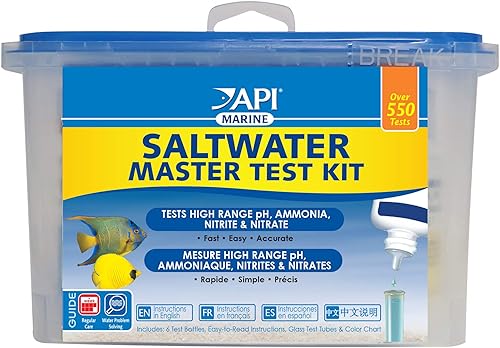
Prime API Saltwater Master Test Kit, 550 Tests for pH

Prime JBL ProAquaTest Easy 7-in-1 Aquarium Water Test

Prime MEXYBE 4-in-1 TDS Meter Digital Water Tester
As an Amazon Associate we earn from qualifying purchases. Product prices and availability are accurate as of the date/time indicated.
Pros
- Fast and simple dip and read design, perfect for beginners
- Measures five key parameters on a single strip to save time
- Compatible with both freshwater and saltwater aquariums
- Large 100-count box supports regular weekly monitoring
- From API, a trusted brand with almost 60 years in fish care
Cons
- Strips provide helpful ranges but are generally less precise than liquid test kits
- pH test range of 6.5 to 8.0 may not suit specialized acidic or alkaline setups
- Paper strips need dry storage and prompt reading to avoid color bleed
The API 5-IN-1 TEST STRIPS 100-Count Box is made for everyday freshwater and saltwater aquarium owners who want quick insight into water quality. It is ideal for beginners, busy hobbyists, and families keeping tropical community fish, cichlids, goldfish, or marine tanks.
Each strip tests pH, nitrite, nitrate, carbonate hardness, and general hardness in under a minute. In real world use, you just dip directly into the tank, compare colors to the chart, and know quickly if water is safe or needs attention.
The design is simple and practical, with lightweight paper strips and a clear color coded chart for fast reading. The compact 100-count box is easy to store and keeps strips on hand for consistent weekly monitoring.
The tradeoff is precision, as strips give helpful ranges rather than exact lab grade numbers. The pH range is also limited to 6.5 to 8.0, so keepers of highly specialized setups may still need a liquid kit.
Overall, this is a convenient, beginner friendly maintenance tool for preventing invisible water problems. If you want fast, no fuss weekly checks to keep fish healthy and thriving, this box is a smart staple for your aquarium cabinet.
Use these strips for weekly monitoring and anytime fish show stress, illness, or unusual behavior. They are also helpful after water changes, adding new fish, or when water looks cloudy or has an odor.
Dip one strip directly into the aquarium, then hold it still without shaking off excess water. Compare each pad to the included color chart right away and follow product recommendations if levels are unsafe.
Store the box sealed in a cool, dry place and avoid touching the test pads. Use a fresh, dry strip each time for the most consistent color match.
Brand API by Mars Fishcare, Model Number 33P, Item Type Aquarium Test Strips for freshwater and saltwater use. Each box contains 100 paper test strips for multi parameter monitoring.
Tests pH from 6.5 to 8.0 plus nitrite, nitrate, carbonate hardness, and general hardness. Lightweight compact packaging at 1.76 ounces for easy storage near your aquarium supplies.
Pros
- Simple fill, drop and compare process that beginners can learn quickly
- Long lasting 550-test capacity ideal for consistent weekly monitoring
- Same style testing used by many local fish stores for dependable results
- All in one box with tubes, reagents, tray, color card and correction guide
Cons
- Color chart reading can be subjective, especially for trace nitrate or nitrite levels
- Testing all four parameters takes time with separate tubes, drops and wait times
- Saltwater only formula, not suitable for freshwater aquariums
The API Saltwater Master Test Kit is a liquid test kit built specifically for marine and reef aquariums. It is made for beginners and experienced hobbyists who need reliable weekly checks to keep fish and invertebrates safe.
It tests the four most critical saltwater parameters: high range pH, ammonia, nitrite and nitrate. Users report it is easy to use, fast, and accurate enough to match results from many local fish stores.
The kit includes six reagent bottles, four glass test tubes with snap-tight caps, a holding tray and a color comparison card. The included booklet clearly explains each step and how to correct unsafe water conditions.
Color matching can be tricky in poor lighting, especially for very low trace readings. Each test also requires separate filling, dosing, shaking and waiting, so full testing takes a few minutes.
For routine saltwater maintenance, this kit offers excellent value, proven reliability and peace of mind. If you keep a marine tank, it is a must have tool for preventing invisible water problems before they harm livestock.
Model: API 401M Saltwater Master Test Kit for marine aquariums. Designed for saltwater use only.
Parameters Tested: High range pH, ammonia, nitrite and nitrate with up to 550 tests per kit.
Box Contents: 6 liquid reagent bottles, 4 test tubes with snap-tight caps, color card, holding tray and instruction booklet.
Usage: Fill tube with 5 ml of water, add drops, compare to color chart. Recommended for weekly monitoring and troubleshooting.
Pros
- Fast 7-in-1 testing saves time compared to liquid kits
- No chemicals, vials or extra tools needed, just dip and read
- Covers key health indicators including nitrite, nitrate, pH, GH and KH
- Suitable for aquariums, ponds, well water and tap water
- 50 strip pack supports consistent weekly monitoring
Cons
- Provides general guidance only, less precise than liquid drop tests
- CO2 value requires manual lookup in table rather than direct reading
- Color matching can be difficult in poor lighting or with subtle shade changes
The JBL ProAquaTest Easy 7-in-1 is a 50 pack of dip test strips designed for quick routine checks in freshwater aquariums, ponds, wells and tap water. It is ideal for beginners and busy hobbyists who want a fast snapshot without mixing reagents.
In use, you dip a strip for 2 to 3 seconds, drain it sideways and read seven values after one minute, including chlorine, pH, GH, KH, nitrite and nitrate plus CO2 via table. This speed makes weekly testing or pre water change checks simple and helps catch issues that cause stress, disease or algae.
Design is straightforward and practical, with clearly separated test pads and a color scale on the packaging for direct comparison. The included CO2 table is a nice bonus for planted tank owners tracking pH stability and plant nutrients.
As with most strips, results are best for general guidance rather than lab grade precision, and color reading can vary with lighting. For cycling a new tank or diagnosing serious problems, you will still want dedicated JBL single tests for ammonia or phosphate.
Overall, this is a convenient and reliable maintenance tool for keeping water close to natural conditions. If you want fast, no mess monitoring between full lab tests, the JBL Easy 7-in-1 is a smart addition to your kit.
Product: JBL ProAquaTest Easy 7-in-1 test strips
Count: 50 test strips per pack
Parameters: Chlorine, pH, general hardness GH, nitrite NO2, nitrate NO3, carbonate hardness KH, CO2 via table
pH Range: 6.4 to 9.0
Uses: Testing water quality in aquariums, ponds, well water and tap water
Method: Dip for 2 to 3 seconds, drain sideways, read after 1 minute
Pros
- Accurate and consistent readings that match other meters in real world tests
- Simple operation with clear backlit display, great for seniors and beginners
- Lightweight, portable design ideal for home, travel, camping and aquarium maintenance
- Wide application range from tap and filtered water to pools and hydroponics
Cons
- Probe may need rinsing with RO or distilled water after use to maintain accuracy
- Plastic housing feels lightweight and less premium than lab-grade meters
- No calibration solution mentioned for long-term recalibration
The MEXYBE 2026 All-New 4-in-1 TDS Meter is a compact digital tester designed for fast home water quality checks. It measures TDS, EC and temperature, making it a practical tool for families, aquarium owners, hydroponic growers and anyone using RO or DI filtration.
In real world use, it delivers quick and consistent readings across drinking water, tap water and aquariums. Users report results that closely match other meters, with easy switching between Celsius and Fahrenheit and auto-lock to freeze the reading for convenience.
The design focuses on ease of use with a 25 percent larger backlit LCD that stays readable in low light. It is lightweight and pocket sized with hold function, factory calibration and auto-off after 2 minutes, plus a handy color TDS chart printed on the back.
It is not a lab grade instrument, and the lightweight plastic body can feel basic with extended use. Like most conductivity testers, the probe benefits from rinsing with clean water after testing salty or nutrient rich samples to keep readings stable.
Overall, this is a reliable, beginner friendly tester for everyday water safety checks and filter monitoring. If you want an affordable and simple way to verify drinking water, aquarium or pool quality, it is a smart addition to your kit.
Model: MEXYBE A2 4-in-1 TDS Meter
Functions: TDS, EC, Temperature in Celsius and Fahrenheit
Measurement Range: 0-9999ppm
Display: Large backlit LCD with hold and auto-lock
Probe: Titanium alloy sensor with high-precision chip
Size and Weight: 3.94 x 3.15 x 1.18 inches, 3.53 ounces
| Timestamp | Part | Common at this level | Our 2026 pick | Why |
|---|---|---|---|---|
| No timestamp listed | setup | a similar setup in this class | API Master Test Kit | A grounded, currently sold option in the water test kit category. |
| No timestamp listed | gear | a similar setup in this class | API GH/KH test kit | A grounded, currently sold option in the water test kit category. |
| No timestamp listed | gear | a similar setup in this class | HM Digital TDS meter | A grounded, currently sold option in the water test kit category. |
| No timestamp listed | gear | a similar setup in this class | JBL GH/KH test kit | A grounded, currently sold option in the water test kit category. |
| No timestamp listed | gear | a similar setup in this class | Salifert GH/KH Profi-Test | A grounded, currently sold option in the water test kit category. |
The most important choice is whether you start with broad coverage or focused hardness accuracy. A master style kit helps you rule out ammonia, nitrite, nitrate, and pH swings, which are common reasons shrimp stop eating or die after a change. A dedicated GH and KH drop kit helps you understand mineral stability, which shows up as clean molts, active grazing, and steady berried females over time.
The second key choice is how you like to test. If you test often, a digital meter for total dissolved solids plus electrical conductivity and temperature is convenient for daily spot checks. It will not replace a GH and KH color change test, but it helps you notice when top offs, fertilizers, or substrate exhaustion are shifting your baseline. For detail on reading drop kits in small tanks, see how to read a GH KH test kit.
My rule is simple. Use the fast tool often and the precise tool when it counts. Check after you change source water, after you replace filter media, or when you see incomplete molts or hiding. Always test in good daylight, rinse tubes with tank water first, and compare against the chart that came in the box. If you switch brands, relearn that brand’s color steps instead of guessing from memory.
My Experience
I keep Neocaridina cherry shrimp in a small planted home tank with a sponge filter and a lot of moss for babies to hide in. When I started testing hardness regularly, I used a product like the API 5-IN-1 TEST STRIPS Freshwater and Saltwater for quick weekly scans because the 100 count box lasts a long time and the dip and compare routine takes about a minute. It monitors pH, nitrite, nitrate, carbonate and general hardness, which helped me catch when my water changes were swinging things more than my shrimp liked.
For hardness decisions, though, I lean on a liquid drop kit in the same way the video shows. I like that I can add one drop at a time, swirl, and watch the shift with my own eyes. When my strips hinted that hardness was drifting, I confirmed with liquid and then made only small, gradual adjustments to my routine. That habit gave me more consistent molts and less stress after water changes, without overhauling the whole tank.
Comparison and Alternatives
The top two picks in the table take different jobs. The API Master Test Kit style option is about breadth, while the API GH and KH test kit style option is about mineral focus. If you can only buy one first for a new shrimp tank, breadth usually wins because ammonia and nitrite problems show up fast and hit hard. If your cycle is mature and your concern is molting, breeding consistency, or switching to remineralized water, the focused hardness kit wins.
In the Products Data, the API Saltwater Master Test Kit 550-Test Saltwater represents the master kit idea well. It contains 6 bottles of testing solution, 1 color card and 4 test tubes with cap, and it accurately monitors high range pH, ammonia, nitrite and nitrate. It is designed for use in saltwater aquariums, so freshwater shrimp keepers should choose the freshwater master version of the same concept, not this saltwater box, and use it for weekly monitoring and when water or shrimp problems appear.
By contrast, the API 5-IN-1 TEST STRIPS Freshwater and Saltwater is about speed and simplicity. You dip test strips into aquarium water and check colors for fast results, which helps prevent invisible water problems that can be harmful and cause loss. It is useful for weekly monitoring and when water or shrimp problems appear, but you should treat any borderline hardness color as a prompt to confirm with liquid, since liquid test kits are generally more accurate than test strips for GH and KH.
A common alternative in the same class is the JBL ProAquaTest Easy 7-in-1, 21 g. That package contains 50 test strips with a color scale and CO2 table, and it is made for testing 7 important water values in 1 minute. You dip into the water for 3 seconds, drain off and compare on the color scale, with determination of chlorine, acidity, general hardness, nitrite, nitrate, carbonate hardness, and CO2. It is convenient for quick checks across aquarium, pond, well and tap water, but the same rule applies, read only against its own included chart.
For a tighter budget or a second tool, consider a digital option like the 2026 All-New 4 in 1 Tds Meter Digital Water Tester. It is a multifunctional 4 in 1 meter for total dissolved solids, electrical conductivity, and temperature in both centigrade and fahrenheit, with a backlit LCD, auto lock function, hold function, and auto off to conserve battery. It is handy for checking top off water, RO output, or quick tank trends, but it does not tell you GH versus KH on its own. For a head to head on drop kits, see API versus Salifert for Caridina.
Three Ways to Set This Up
You can build around the same testing habit at three levels. Pick the level that matches your shrimp, your source water, and how often you will actually test. Adapt quantity and bottle size to your own tank volume and test frequency, a small desktop tank needs far fewer refills than a rack of breeding tanks.
Beginner budget version with API Master Test Kit
Start with the API Master Test Kit concept for broad coverage plus the API 5-IN-1 TEST STRIPS Freshwater and Saltwater for fast scans. This suits a first Neocaridina starter tank where your main risks are cycling bumps and inconsistent water changes. Who it suits: new keepers who want simple weekly checks and a clear prompt for when to do a partial change or pause feeding.
Balanced version we recommend with API GH and KH test kit
Use the API GH and KH test kit style liquid kit as your core, backed by a master kit for ammonia, nitrite, nitrate, and pH. This suits a Caridina tank or a Neocaridina tank moving to remineralized water where mineral steadiness matters more. Who it suits: keepers who test after every water change and want to confirm hardness with a drop by drop color change before adjusting anything.
Higher end version with HM Digital TDS meter style meter
Combine a liquid GH and KH kit with a digital meter in the style of the 2026 All-New 4 in 1 Tds Meter Digital Water Tester for quick trend spotting. This suits a Taiwan Bee or mixed Caridina setup where you check source water often and want fast reads on total dissolved solids, conductivity, and temperature. Who it suits: experienced keepers who will still confirm important shifts with liquid and the manufacturer’s own color chart.
FAQ
Are test strips accurate enough for shrimp tank GH and KH?
Strips are useful for fast weekly scans and for spotting a trend, but liquid test kits are generally more accurate than test strips for GH and KH. If a strip color looks borderline or your shrimp show molting issues, confirm with a liquid drop test. Always read against the manufacturer’s included color chart in good light.
What should I test first in a new Neocaridina shrimp tank?
Test ammonia, nitrite, nitrate, and pH first, because those tell you if the tank is cycled and safe. Then add GH and KH checks to understand mineral stability for molting. This order helps you avoid fixing hardness while missing a cycling problem that is more urgent.
Can a TDS meter replace a GH and KH drop test?
No, it is a complement, not a replacement. A meter gives you a fast total reading that is great for tracking top offs and source water drift. A drop test tells you about general and carbonate hardness specifically, so use both when you are dialing in a Caridina or Taiwan Bee routine.
Final Verdict
If you like the hands on style in this video, build the same habit with tools you can buy today. Start broad to keep water safe, then get focused on hardness once your cycle is steady and your shrimp are settled and grazing. That balance gives you speed for daily life and confidence when it matters.
Our pick: the balanced version with API GH and KH test kit backed by broad coverage, for keepers who want steady molts without overcomplicating weekly care.
This roundup is not the right choice if you only need a single one-time reading; a liquid test kit is aimed at keepers who want to monitor parameters regularly over time.
Write Your Review
No reviews yet. Be the first to share your experience!