

Video credit: Lazy Man's Aquarium. Original video: https://www.youtube.com/watch?v=7iRSFDpPNHA. This is our own independent breakdown and is not affiliated with the video creator. As an Amazon Associate, Shrimpyo earns from qualifying purchases. Product prices shown in the video may have changed.
Watch the video
Product breakdown
- API Master Test Kit
- API GH/KH test kit
- HM Digital TDS meter
- JBL GH/KH test kit
- Salifert GH/KH Profi-Test
This breakdown is our own summary of the video for reference. Confirm current specs and price on the retailer page before buying.
Watch the Video
This is our own independent breakdown and is not affiliated with the video creator. As an Amazon Associate, Shrimpyo earns from qualifying purchases. Product prices shown in the video may have changed.
If you keep Neocaridina or Caridina shrimp, you already know clear water can still hide problems. This kind of testing routine is for you when you want calmer molts, steadier breeding, and fewer mystery losses. You will use simple liquid checks and a handheld meter to track trends over time.
What This Video Covers
This video from Lazy Man’s Aquarium is a TDS meter shrimp tank tutorial, and it gives a real world look at a setup in this class. Think of it as representative of the budget and approach, not as the exact configuration we list below. You see the general workflow that many shrimp keepers use to check dissolved solids and relate those readings to water changes and tank stability.
This approach suits a small Neocaridina starter colony as well as a mid size Caridina breeding setup. Neocaridina cherry types are usually more forgiving of swings, while Caridina crystal types and Taiwan Bee types ask for more consistency. In both cases you are watching for stability across weeks, not chasing a perfect single reading on one day. Updated in November 2026, this routine still holds up because the tools have stayed simple and affordable.
A TDS meter tells you about total dissolved solids in a qualitative way, but it does not tell you which minerals are present. That is the main tradeoff at this level. You get speed and convenience with a meter, yet you still need liquid checks for ammonia, nitrite, nitrate, pH, plus GH and KH if you want the full picture. For a deeper look at cycling and basic chemistry, see how to tell if shrimp tank is cycled when test strips read zero.
Liquid test kits are generally more accurate than test strips for GH and KH, and results should be read against the manufacturer’s included color chart rather than a competitor’s chart. I learned this the hard way when comparing two brands side by side under warm room light. The colors looked close until I switched to daylight and used each kit with its own card. If you use strips for daily speed, confirm any odd result with a liquid kit before you act.
For routine care, test weekly and any time shrimp act off, after a filter cleaning, or after a larger than usual water change. Keep notes so you can see drift over time instead of reacting to one sample. If you remineralize RO water, follow the manufacturer’s own dosing chart for your specific product, dose gradually, and test the water after dosing. That slow approach helps you avoid sudden shifts that can stress berried females and new shrimplets.
Another tradeoff is time versus confidence. Strips take seconds and are easy to keep by the tank, while liquid kits take longer but give you clearer color steps for ammonia and nitrate. A meter adds a third layer by showing whether your source water or tank water is trending up or down. If ammonia is part of your worry, this guide pairs well with how to lower ammonia for shrimp tanks.
You can browse more options in our Water Test Kit archive if you want to compare styles. The goal here is not to own every kit. It is to pick one dependable core kit, add GH and KH coverage, and add a meter only if you will actually use it. That keeps your stand tidy and your testing habit consistent.
Timestamp Breakdown
This is the core of the article. Below you see what is common at this level in a setup in this class, alongside our current picks for 2026. The video itself is representative, so never assume the creator used our exact models. Use the table to map the general gear type to what you would buy today.
This article contains affiliate links. If you buy through one of our links, Shrimpyo may earn a commission at no extra cost to you. Commissions never influence which products we recommend or how we rank them. Read our Affiliate Disclosure for details.
Quick Picks at a Glance

Prime API Freshwater Master Test Kit 800-Test for pH

Prime API 5-in-1 Aquarium Test Strips 100-Count

Prime JBL ProAquaTest Easy 7-in-1 Aquarium Water Test

Prime MEXYBE 4-in-1 TDS Meter Digital Water Tester
As an Amazon Associate we earn from qualifying purchases. Product prices and availability are accurate as of the date/time indicated.
Pros
- Covers all five vital freshwater parameters in one kit instead of buying separate tests
- Large 800 test capacity supports weekly testing for months
- Liquid reagent method is more precise than quick dip strips
- Clear instructions and laminated color card make results easy to read and act on
Cons
- Freshwater only, not compatible with saltwater or reef aquariums
- Liquid testing takes more time and steps than test strips
- Color matching can be difficult in poor lighting and requires careful timing
The API Freshwater Master Test Kit is an all in one liquid testing system for freshwater aquariums. It is ideal for owners of tropical community tanks, cichlids and goldfish who need dependable weekly checks to keep fish healthy.
The kit measures pH, high range pH, ammonia, nitrite and nitrate, the five levels most linked to fish stress and loss. In real world use, the liquid reagents give clear color changes that help you spot ammonia spikes or nitrate buildup from waste and uneaten food.
Inside the box you get seven reagent bottles, four capped test tubes, a holding tray and a computer calibrated laminated color card. The components feel sturdy and practical, and the card holds up well to repeated use around water.
The main tradeoff is that liquid testing takes a few minutes per parameter and requires careful measuring and color comparison. It is also freshwater only, so saltwater keepers will need a different kit.
Overall, this is one of the best value choices for freshwater fishkeepers who want accuracy without guesswork. If you test weekly and follow the action recommendations, it helps maintain balanced water and a safer tank environment.
Includes 7 testing solution bottles, 4 test tubes with caps, holding tray and laminated color card. Designed for weekly monitoring and troubleshooting when water or fish problems appear.
Tests pH, high range pH, ammonia, nitrite and nitrate. Capacity up to 800 tests. For freshwater aquariums only, including tropical community fish, cichlids and goldfish.
Product dimensions 9.13 x 3.5 x 4.65 inches. Item weight 1.15 pounds. Model number 34. Manufacturer Mars Fishcare.
Pros
- Fast and simple dip and read design, perfect for beginners
- Measures five key parameters on a single strip to save time
- Compatible with both freshwater and saltwater aquariums
- Large 100-count box supports regular weekly monitoring
- From API, a trusted brand with almost 60 years in fish care
Cons
- Strips provide helpful ranges but are generally less precise than liquid test kits
- pH test range of 6.5 to 8.0 may not suit specialized acidic or alkaline setups
- Paper strips need dry storage and prompt reading to avoid color bleed
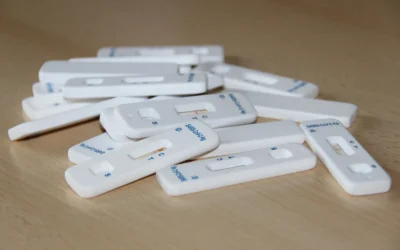
The API 5-IN-1 TEST STRIPS 100-Count Box is made for everyday freshwater and saltwater aquarium owners who want quick insight into water quality. It is ideal for beginners, busy hobbyists, and families keeping tropical community fish, cichlids, goldfish, or marine tanks.
Each strip tests pH, nitrite, nitrate, carbonate hardness, and general hardness in under a minute. In real world use, you just dip directly into the tank, compare colors to the chart, and know quickly if water is safe or needs attention.
The design is simple and practical, with lightweight paper strips and a clear color coded chart for fast reading. The compact 100-count box is easy to store and keeps strips on hand for consistent weekly monitoring.
The tradeoff is precision, as strips give helpful ranges rather than exact lab grade numbers. The pH range is also limited to 6.5 to 8.0, so keepers of highly specialized setups may still need a liquid kit.
Overall, this is a convenient, beginner friendly maintenance tool for preventing invisible water problems. If you want fast, no fuss weekly checks to keep fish healthy and thriving, this box is a smart staple for your aquarium cabinet.
Use these strips for weekly monitoring and anytime fish show stress, illness, or unusual behavior. They are also helpful after water changes, adding new fish, or when water looks cloudy or has an odor.
Dip one strip directly into the aquarium, then hold it still without shaking off excess water. Compare each pad to the included color chart right away and follow product recommendations if levels are unsafe.
Store the box sealed in a cool, dry place and avoid touching the test pads. Use a fresh, dry strip each time for the most consistent color match.
Brand API by Mars Fishcare, Model Number 33P, Item Type Aquarium Test Strips for freshwater and saltwater use. Each box contains 100 paper test strips for multi parameter monitoring.
Tests pH from 6.5 to 8.0 plus nitrite, nitrate, carbonate hardness, and general hardness. Lightweight compact packaging at 1.76 ounces for easy storage near your aquarium supplies.
Pros
- Fast 7-in-1 testing saves time compared to liquid kits
- No chemicals, vials or extra tools needed, just dip and read
- Covers key health indicators including nitrite, nitrate, pH, GH and KH
- Suitable for aquariums, ponds, well water and tap water
- 50 strip pack supports consistent weekly monitoring
Cons
- Provides general guidance only, less precise than liquid drop tests
- CO2 value requires manual lookup in table rather than direct reading
- Color matching can be difficult in poor lighting or with subtle shade changes
The JBL ProAquaTest Easy 7-in-1 is a 50 pack of dip test strips designed for quick routine checks in freshwater aquariums, ponds, wells and tap water. It is ideal for beginners and busy hobbyists who want a fast snapshot without mixing reagents.
In use, you dip a strip for 2 to 3 seconds, drain it sideways and read seven values after one minute, including chlorine, pH, GH, KH, nitrite and nitrate plus CO2 via table. This speed makes weekly testing or pre water change checks simple and helps catch issues that cause stress, disease or algae.
Design is straightforward and practical, with clearly separated test pads and a color scale on the packaging for direct comparison. The included CO2 table is a nice bonus for planted tank owners tracking pH stability and plant nutrients.
As with most strips, results are best for general guidance rather than lab grade precision, and color reading can vary with lighting. For cycling a new tank or diagnosing serious problems, you will still want dedicated JBL single tests for ammonia or phosphate.
Overall, this is a convenient and reliable maintenance tool for keeping water close to natural conditions. If you want fast, no mess monitoring between full lab tests, the JBL Easy 7-in-1 is a smart addition to your kit.
Product: JBL ProAquaTest Easy 7-in-1 test strips
Count: 50 test strips per pack
Parameters: Chlorine, pH, general hardness GH, nitrite NO2, nitrate NO3, carbonate hardness KH, CO2 via table
pH Range: 6.4 to 9.0
Uses: Testing water quality in aquariums, ponds, well water and tap water
Method: Dip for 2 to 3 seconds, drain sideways, read after 1 minute
Pros
- Accurate and consistent readings that match other meters in real world tests
- Simple operation with clear backlit display, great for seniors and beginners
- Lightweight, portable design ideal for home, travel, camping and aquarium maintenance
- Wide application range from tap and filtered water to pools and hydroponics
Cons
- Probe may need rinsing with RO or distilled water after use to maintain accuracy
- Plastic housing feels lightweight and less premium than lab-grade meters
- No calibration solution mentioned for long-term recalibration
The MEXYBE 2026 All-New 4-in-1 TDS Meter is a compact digital tester designed for fast home water quality checks. It measures TDS, EC and temperature, making it a practical tool for families, aquarium owners, hydroponic growers and anyone using RO or DI filtration.
In real world use, it delivers quick and consistent readings across drinking water, tap water and aquariums. Users report results that closely match other meters, with easy switching between Celsius and Fahrenheit and auto-lock to freeze the reading for convenience.
The design focuses on ease of use with a 25 percent larger backlit LCD that stays readable in low light. It is lightweight and pocket sized with hold function, factory calibration and auto-off after 2 minutes, plus a handy color TDS chart printed on the back.
It is not a lab grade instrument, and the lightweight plastic body can feel basic with extended use. Like most conductivity testers, the probe benefits from rinsing with clean water after testing salty or nutrient rich samples to keep readings stable.
Overall, this is a reliable, beginner friendly tester for everyday water safety checks and filter monitoring. If you want an affordable and simple way to verify drinking water, aquarium or pool quality, it is a smart addition to your kit.
Model: MEXYBE A2 4-in-1 TDS Meter
Functions: TDS, EC, Temperature in Celsius and Fahrenheit
Measurement Range: 0-9999ppm
Display: Large backlit LCD with hold and auto-lock
Probe: Titanium alloy sensor with high-precision chip
Size and Weight: 3.94 x 3.15 x 1.18 inches, 3.53 ounces
| Timestamp | Part | Common at this level | Our 2026 pick | Why |
|---|---|---|---|---|
| setup | a similar setup in this class | API Master Test Kit | A grounded, currently sold option in the water test kit category. | |
| gear | a similar setup in this class | API GH/KH test kit | A grounded, currently sold option in the water test kit category. | |
| gear | a similar setup in this class | HM Digital TDS meter | A grounded, currently sold option in the water test kit category. | |
| gear | a similar setup in this class | JBL GH/KH test kit | A grounded, currently sold option in the water test kit category. | |
| gear | a similar setup in this class | Salifert GH/KH Profi-Test | A grounded, currently sold option in the water test kit category. |
The most important choice is your core liquid kit. For the API Master Test Kit slot, the version I point people to is API Freshwater Master Test Kit 800-Test Freshwater. It includes 7 bottles of testing solutions, 1 color card and 4 tubes with cap, and it is designed to monitor pH, high range pH, ammonia, nitrite and nitrate in freshwater aquariums. That coverage helps you catch cycling issues and nitrate creep before shrimp stop breeding.
The second key choice is GH and KH coverage. A dedicated GH and KH liquid kit complements a master kit because TDS alone cannot show hardness balance. Liquid kits in this group are generally more precise than strips when you follow the drop count and read against the included chart in good light. Keep the instructions with the kit so anyone helping with water changes uses the same method.
The third choice is whether to add a handheld meter for speed. A meter is useful for checking source water, RO output, and tank trends between full liquid tests. It does not replace ammonia or nitrite testing, and it should not drive large water changes on its own. Use it as an early signal, then confirm with liquid when the trend looks odd.
My Experience
I keep Neocaridina cherries in a small desktop colony tank with sponge filtration and plenty of moss, and I test on the same weekday to keep results comparable. For that tank, a kit like API Freshwater Master Test Kit 800-Test Freshwater has been my workhorse because the tubes rinse clean, the color card is easy to read in daylight, and weekly monitoring fits my water change rhythm. When nitrate starts climbing or pH looks less stable than usual, I cut back on feeding and check the filter flow before I touch anything else.
I also keep a Caridina leaning setup with active soil where GH and KH matter more to me. There I use strips only for a quick glance, then I trust liquid for decisions. The habit that helped most was writing results in a small notebook with date, water changed, and shrimp behavior. Over a few weeks you start to see your own normal range, which is more useful than any single online number.
Comparison and Alternatives
Compare the top two slots from the table and the difference is scope. The API Master Test Kit type covers the nitrogen cycle and pH family, which every new tank needs. The API GH and KH test kit type covers hardness, which matters more once your cycle is stable and you focus on molting and breeding. Most keepers do best starting with the master style kit, then adding hardness coverage next.
In current terms, that master slot maps well to API Freshwater Master Test Kit 800-Test Freshwater. It is freshwater only, built for weekly monitoring and for times when water or fish problems appear, and the bottle and tube format feels familiar after one or two uses. The downside is time. You need a clear table, good light, and a few minutes without rush. If you will not do that consistently, you will get more value from a simpler routine you actually follow.
For hardness help and for a head to head on methods, read API GH & KH TEST KIT freshwater aquarium water vs salifert master reef testing combo kit. Liquid GH and KH kits ask for patience with drop counting, but the stepwise color change is easier to judge than subtle strip pads. Salifert style kits appeal to Caridina keepers who test often, while API style hardness kits appeal to beginners who want straightforward instructions.
If budget is tight, a lower cost swap for speed is API 5-IN-1 TEST STRIPS Freshwater and Saltwater. You dip the strip and check colors for pH, nitrite, nitrate, carbonate and general hardness, which helps you spot invisible problems between liquid tests. The tradeoff is resolution, especially for low level ammonia which this strip format does not cover in the same way as a liquid ammonia test. Do not use strips alone to declare a new tank cycled.
Another alternative in the strip lane is JBL ProAquaTest Easy 7-in-1, 21 g. It is made to test several values in about a minute after dipping for a few seconds, then comparing on the color scale. The pack includes 50 test strips with a color scale and CO2 table, which is handy for planted shrimp tanks. Who should not buy this way. If you keep sensitive Taiwan Bee shrimp or you are troubleshooting repeated molting issues, skip relying on strips and go straight to liquid for GH, KH, ammonia, nitrite and nitrate.
Three Ways to Set This Up
Pick the version that matches your shrimp and your patience for testing. Adapt quantity and size to your own tank volume, and keep one method long enough to learn your baseline. All three versions below assume dechlorinated water, stable temperature, and slow changes.
Budget Starter for Neocaridina Colony
Start with the Budget pick, API Master Test Kit, adapted to your own tank volume. In practice that means a core liquid kit like API Freshwater Master Test Kit 800-Test Freshwater for ammonia, nitrite, nitrate and pH checks. This suits you if you run a hardy cherry shrimp colony and want one kit that covers cycling and weekly checks without clutter.
Add a simple notebook and test at the same time of day. This is not for you if you already know you will skip liquid steps. In that case a strip routine you follow is better than a liquid kit you avoid, as long as you confirm problems with liquid before acting.
Balanced Pick for Caridina Tank
Choose the Mid-range pick, API GH and KH test kit, paired with your master kit. This is the balanced version I recommend for crystal shrimp keepers who want clearer insight into molting support. You still test ammonia and nitrate with liquid, but you add hardness drops to understand stability after water changes.
This suits you if you use active soil or remineralized RO and you test on a schedule. Follow the manufacturer’s own dosing chart for your specific mineral product, dose gradually, and test the water after dosing. It is not for keepers who want one second answers, since drop tests reward calm lighting and careful counting.
Higher End Focus for Taiwan Bee Tank
Choose the Premium pick, HM Digital TDS meter style handheld meter, on top of liquid coverage. For a current handheld option in this lane, many keepers look at 2026 All-New 4 in 1 Tds Meter Digital Water Tester which is described as a 4 in 1 meter for TDS, EC and temperature with backlit display, hold function and auto off. This suits you if you check source water often and like quick trend checks between full tests.
Use the meter to flag change, not to diagnose cause. If the trend moves, confirm with liquid GH, KH, ammonia, nitrite and nitrate before adjusting minerals or water volume. This is not for beginners on a tight budget, since money is better spent first on a solid liquid core and consistent water changes.
FAQ
Do I need a TDS meter if I already have a liquid test kit for shrimp?
You do not strictly need one, but many keepers like the speed for checking source water and weekly trends. A liquid kit remains essential for ammonia, nitrite, nitrate and pH. Think of the meter as a companion that tells you when to run the full liquid panel.
Are test strips accurate enough for Caridina shrimp?
Strips are useful for quick looks, yet liquid kits are generally more accurate for GH and KH and for low level nitrogen readings. If you keep Caridina or Taiwan Bee types, use strips only for screening. Confirm any surprising strip color with liquid read against its own included chart.
How often should I test TDS and hardness in a shrimp tank?
For most stable colonies, weekly testing plus a check after unusual events is a good rhythm. Test after filter maintenance, after larger water changes, or when you see lethargy or failed molts. Keep written notes so you react to trends rather than single samples.
Final Verdict
For most shrimp keepers, liquid first and meter second is the calmest path. You get reliable cycle data, clearer hardness insight, and a fast way to spot drift without overreacting. Keep the routine simple enough that you will still do it on a busy week.
Our pick: the Balanced Pick for Caridina Tank, because it pairs a dependable master style liquid core with dedicated GH and KH coverage for steadier molts, while leaving room to add a handheld meter later if you enjoy trend tracking.
This roundup is not the right choice if you only need a single one-time reading; a liquid test kit is aimed at keepers who want to monitor parameters regularly over time.
Write Your Review
No reviews yet. Be the first to share your experience!